
Reading time: 2 minutes
Author: Thomas Masuch
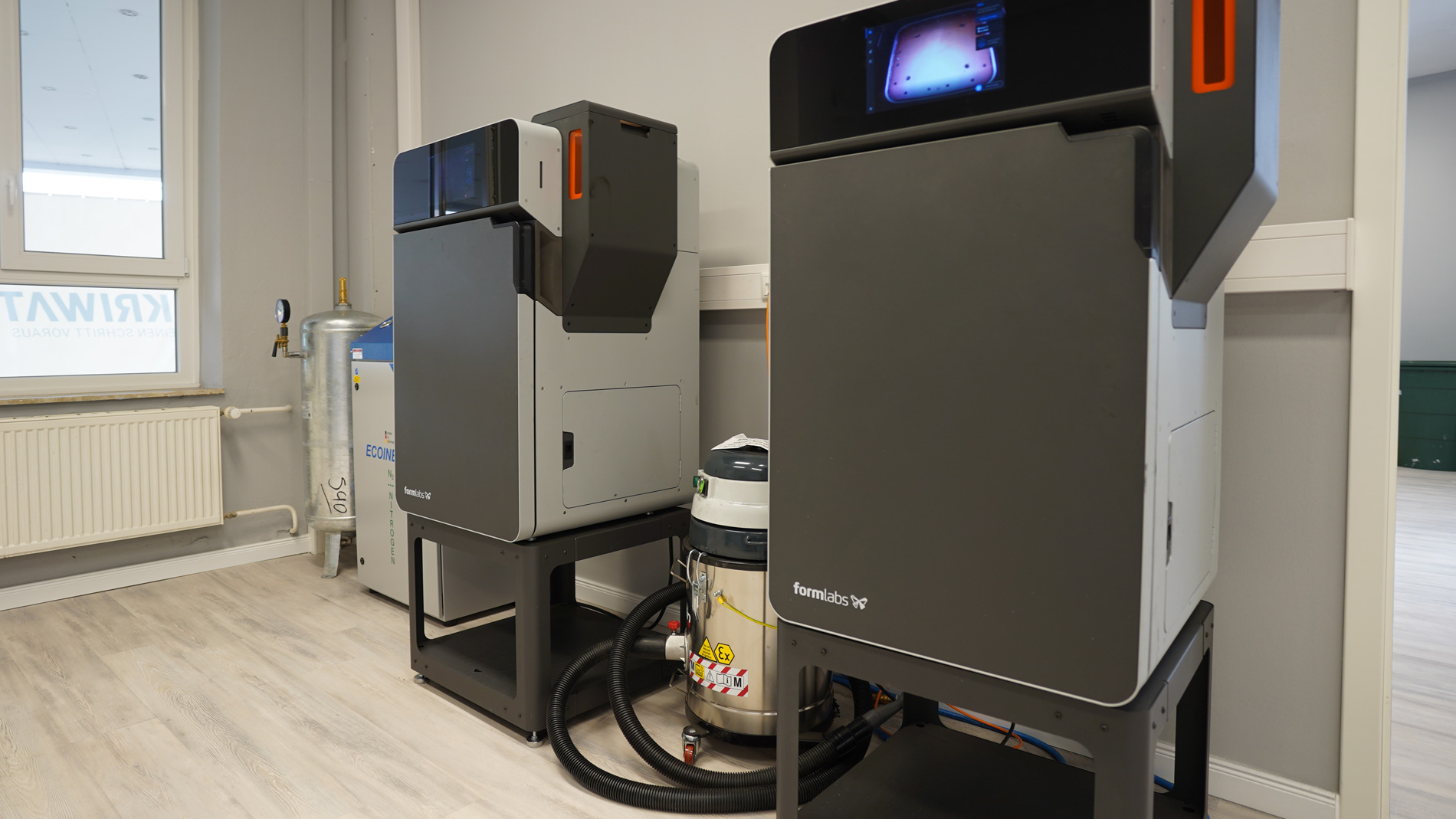
When Lais Kriwat became increasingly involved in the family business Kriwat GmbH around ten years ago as a trainee orthopedic shoemaker, he also became interested in the potential of Additive Manufacturing for orthopedics. Today, the company is a pioneer in the 3D printing sector: The family-owned business produces most of its orthoses and orthopedic insoles at its own large AM production facility in Kiel.
The adoption and expansion of 3D printing was not an overnight success and was not purely driven by technological enthusiasm. The traditional company, which now employs 60 people, was founded by Lias Kriwat’s grandfather, who supplied orthopedic shoes to wounded war veterans in the aftermath of World War II. Lias Kriwat’s father later expanded the portfolio to include insoles for athletes and the general public. When additive manufacturing was first adopted, his father and grandfather insisted that products should only be 3D printed if the result was of a higher quality than using the traditional manual process. “And we continue to be guided by this principle,” says Lais Kriwat, who has since completed his further training as a master orthopedic technician and took over management of Kriwat GmbH last year.
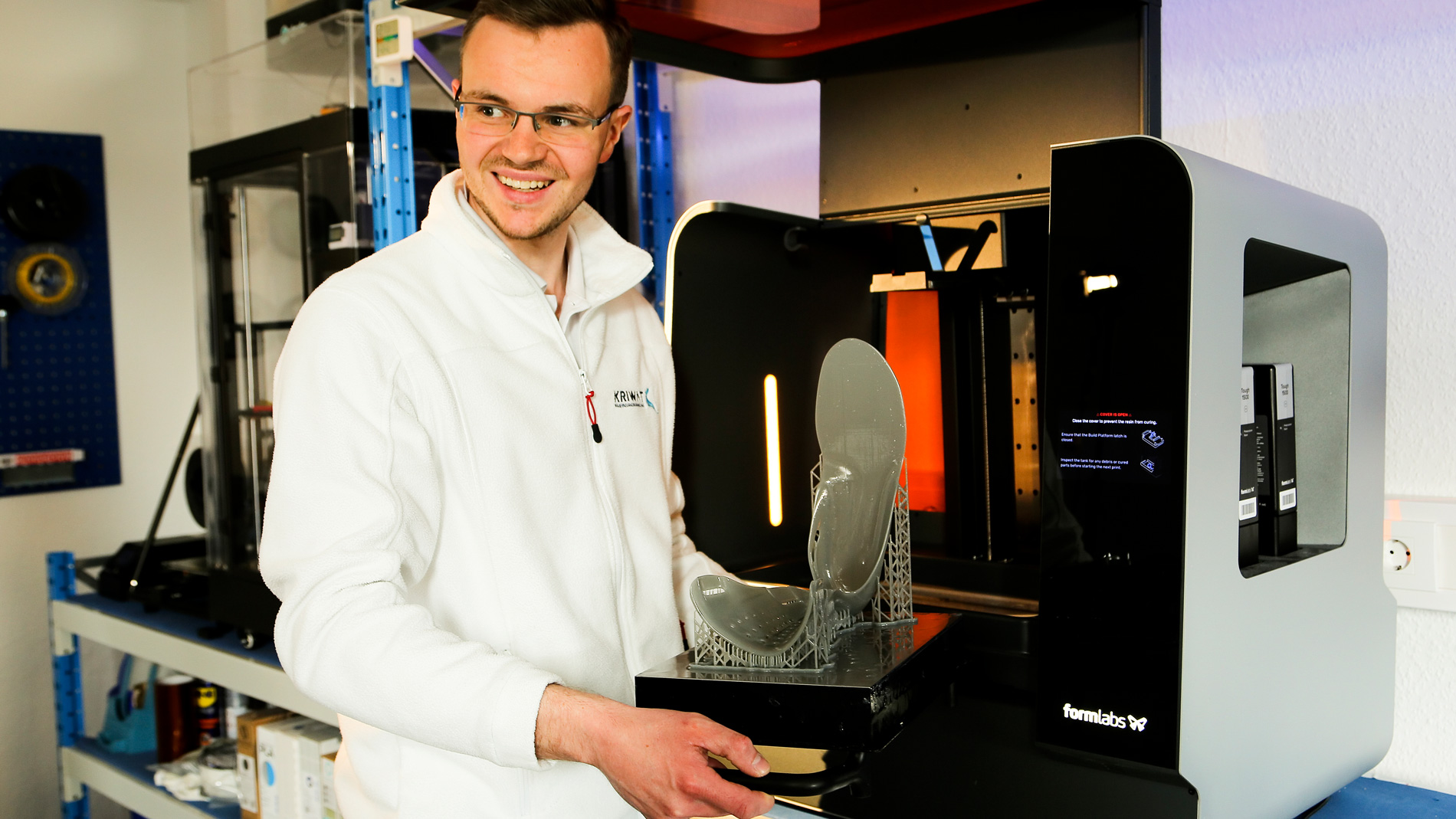
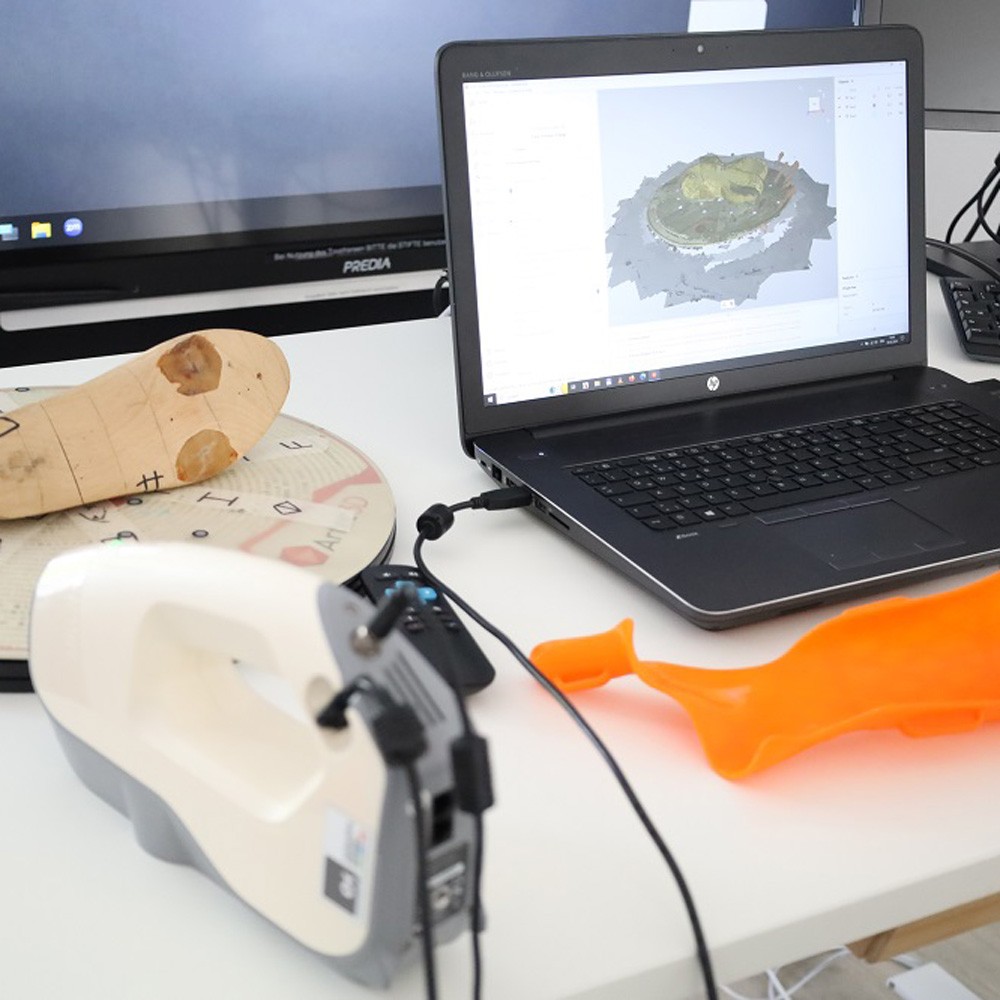
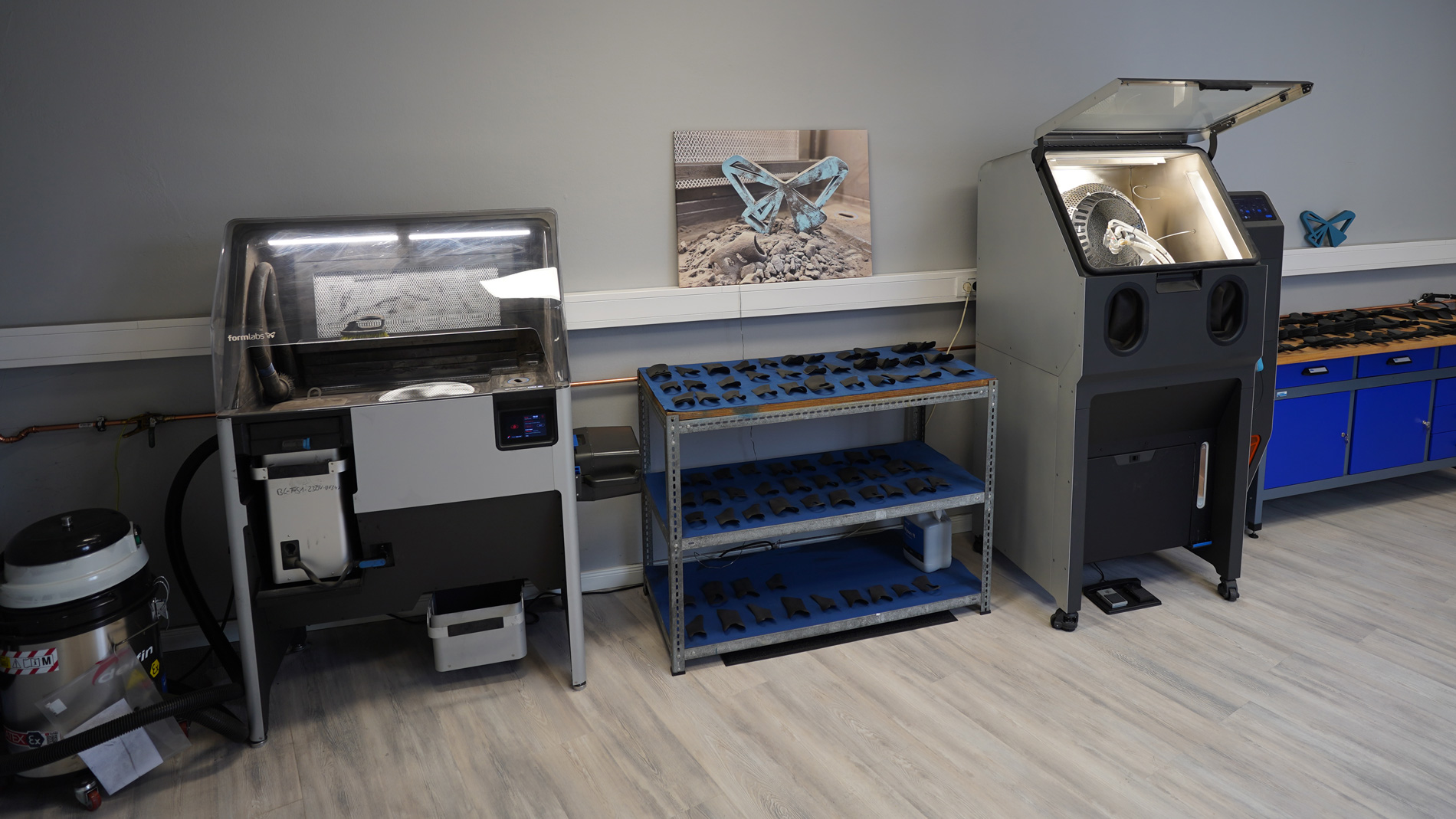
The first step on the journey to 3D-printed orthoses was the purchase of a small FDM printer “to better understand with the technology,” recalls Lais Kriwat, who also familiarized himself with PC modeling and scanning. Over the years, other larger FDM, SLA and SLS printers followed. Instead of ordering 3D-printed orthoses from service providers, Kriwat focused on setting up its own in-house AM production. “That was the only way to keep expanding our technical expertise.” This is just one reason why he is also always keen to discover the latest innovations at the annual Formnext in Frankfurt.
AM production with 15 printers
AM production in Kiel now comprises 15 3D printers, which are manned by three permanent employees. Even though Kriwat GmbH, with its seven branches, is certainly one of the larger orthopedic specialist companies in Germany, the purchase of the larger printers and peripherals represented a considerable investment. According to Lias Kriwat, however, “They have absolutely paid for themselves.” An important factor is the MDR certification (Medical Device Regulation, EU 2017/745), which requires, among other things, the use of bio-certified materials. In addition, as in traditional manufacturing, AM production in Kiel is subject to regular data protection and documentation audits.
-04.jpg)
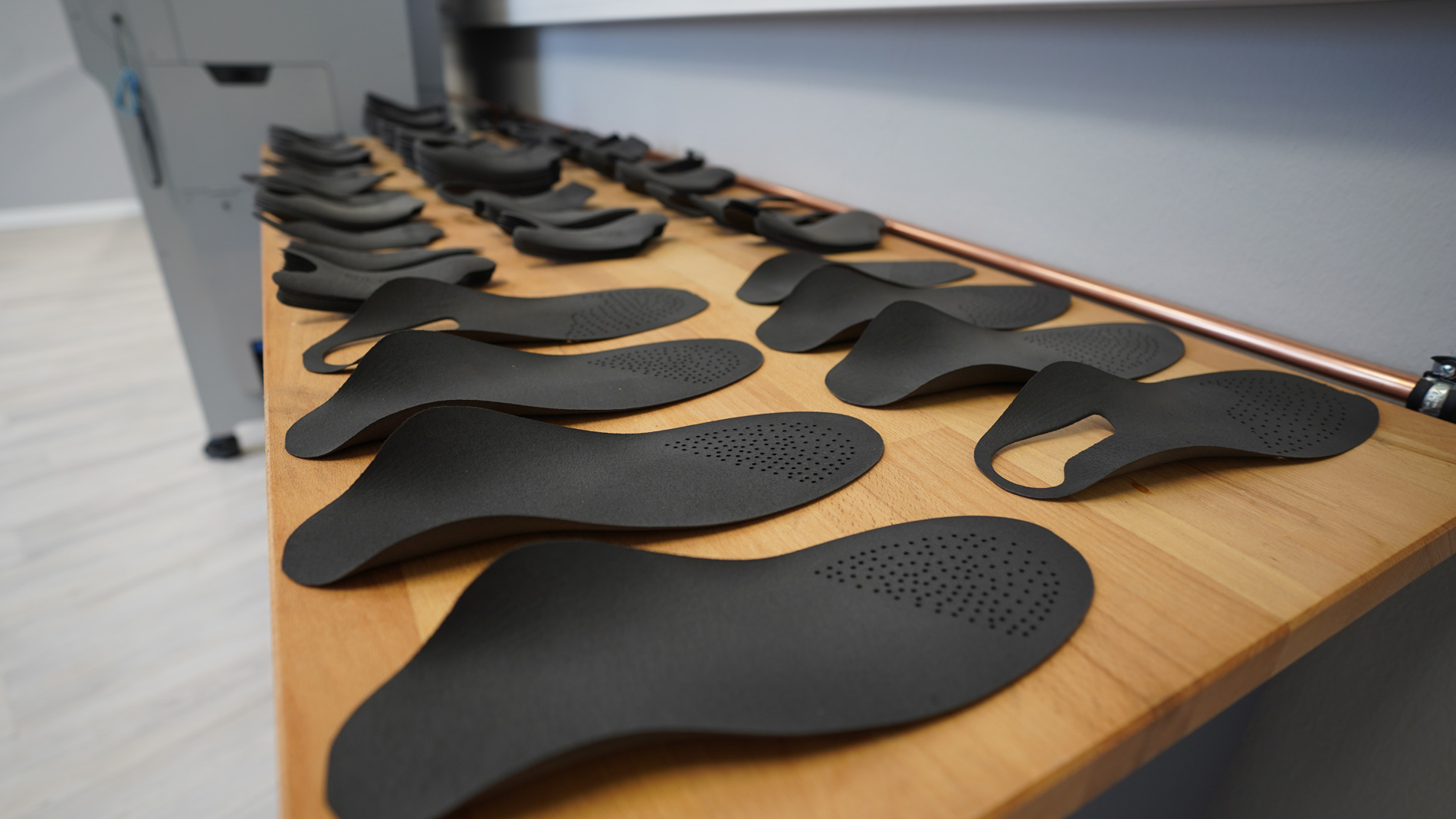
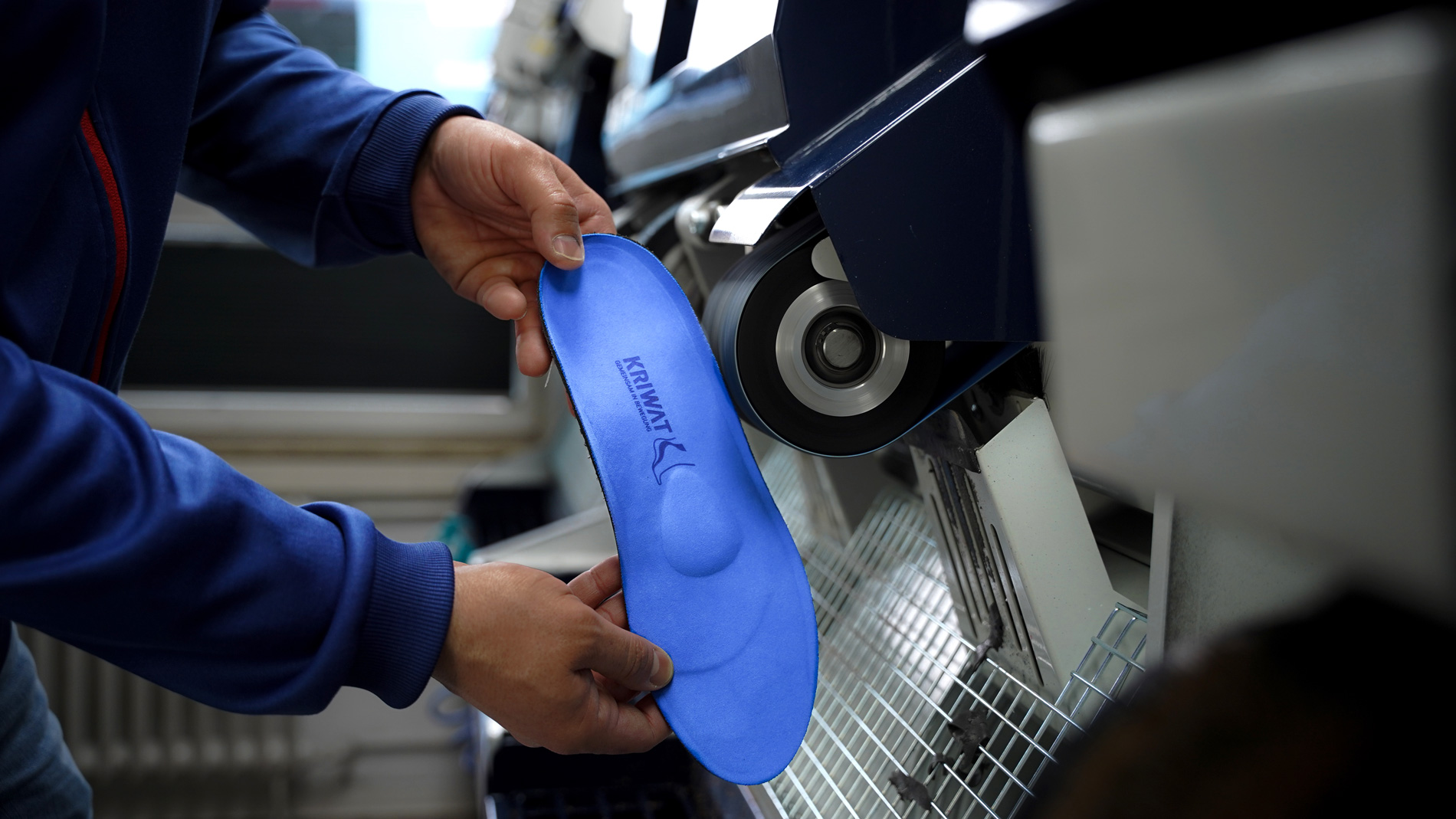
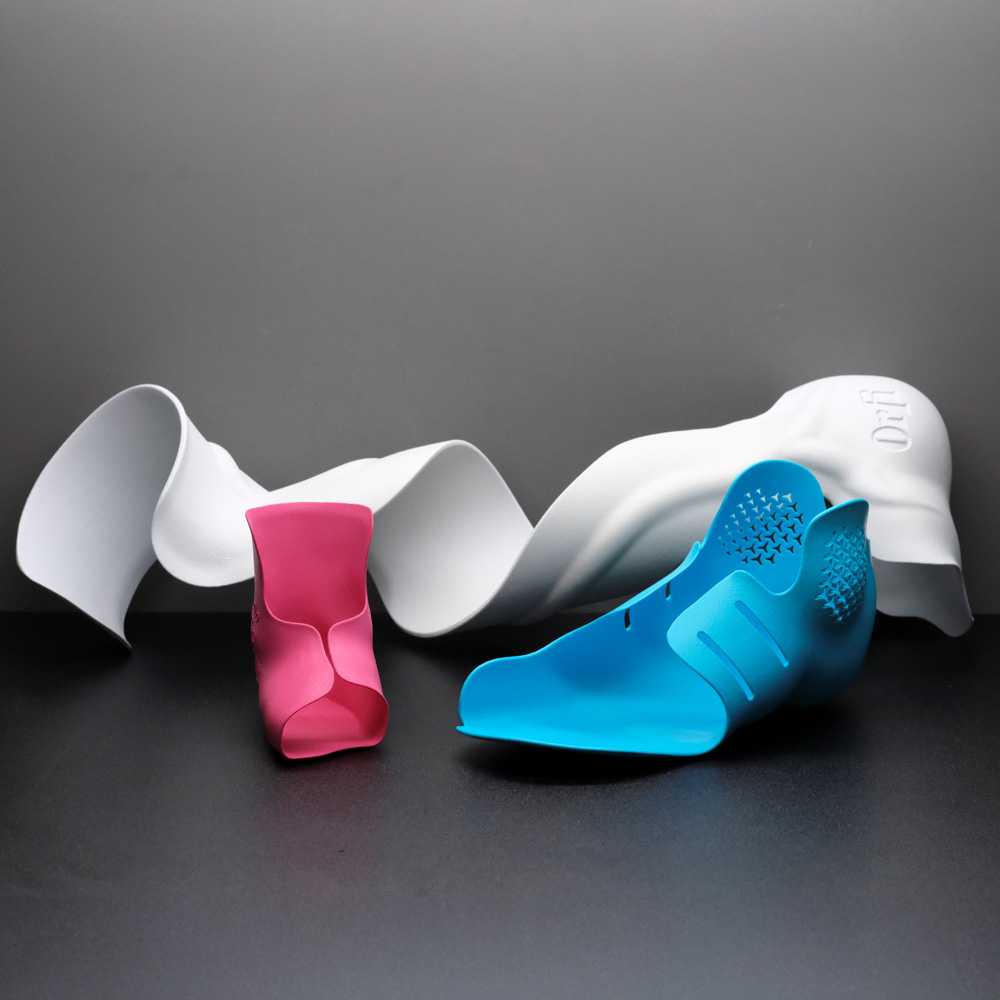
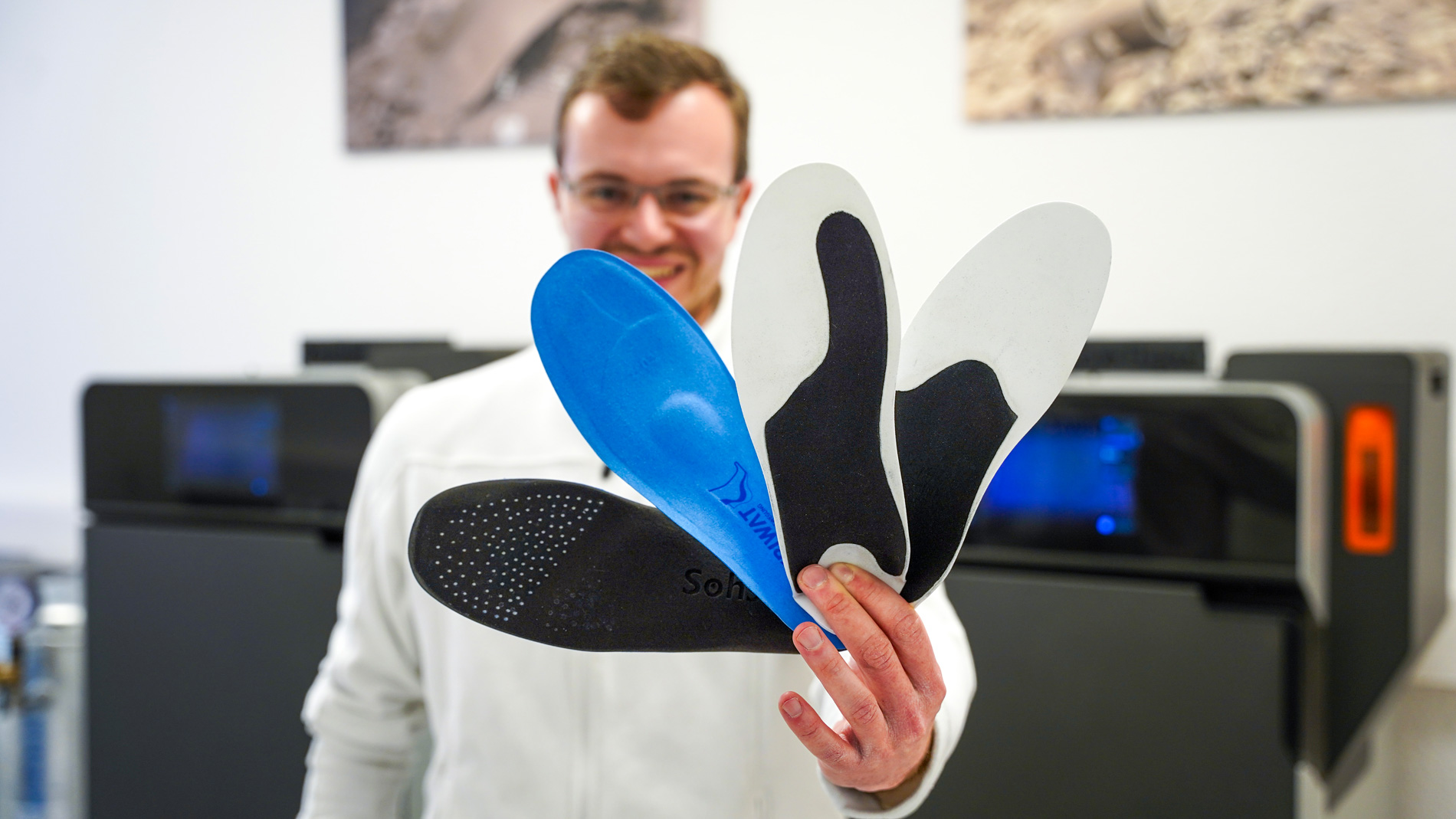
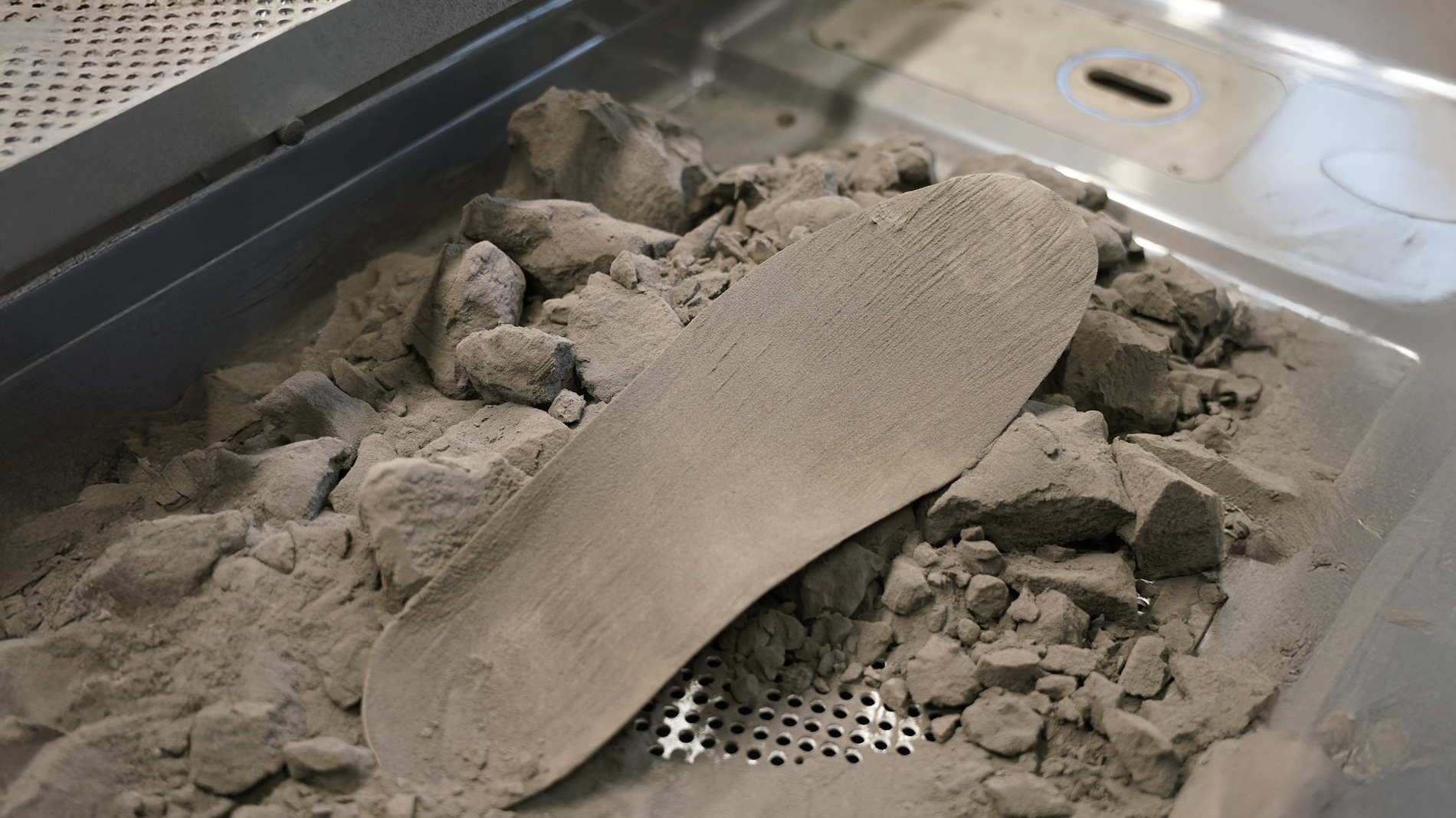
Various orthopedic insoles manufactured using 3D Printing. Images: Orthopädiebetrieb Kriwat
Products: Insoles, orthotics, and more
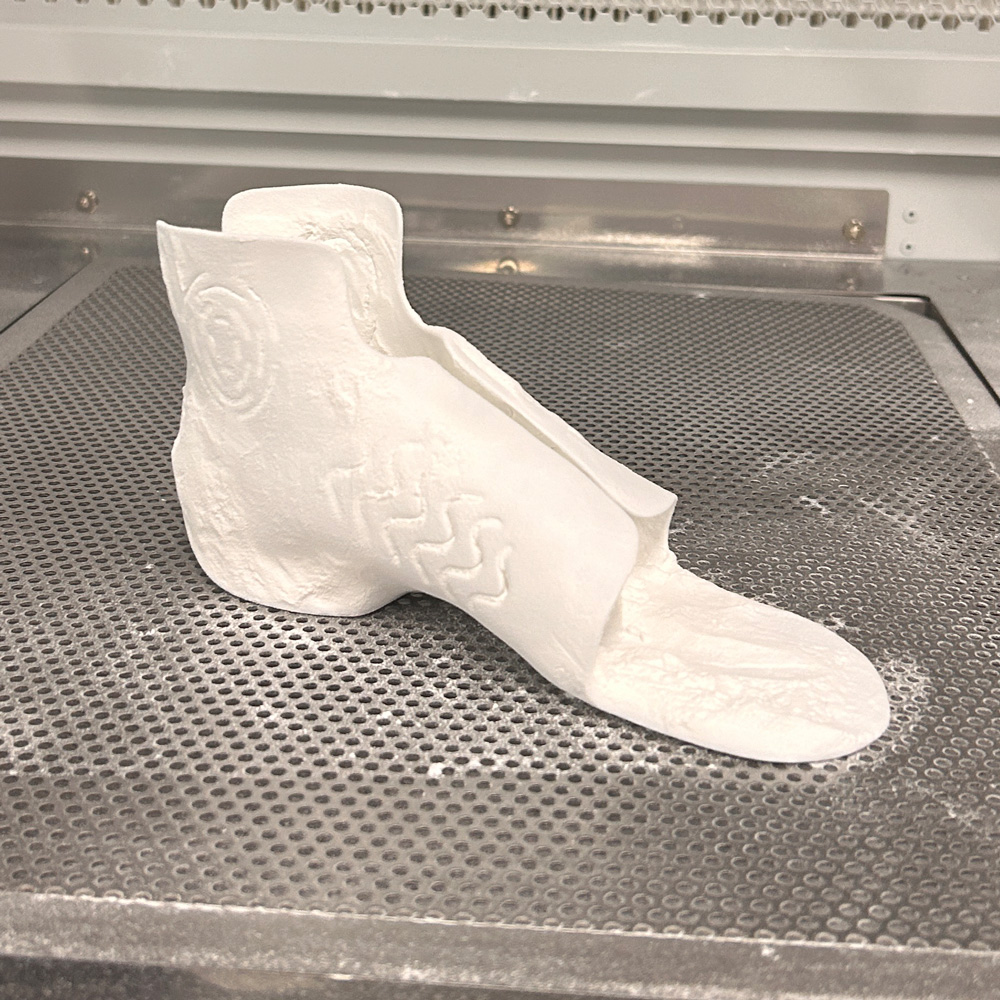
At Kriwat GmbH, 3D printing has now replaced traditional manufacturing for orthopedic shoe insoles (which are produced using SLS or FDM printing) and ankle orthotics. Ankle orthoses, for example, ensure that the foot remains in an anatomically healthy position for people who suffer from osteoarthritis or have twisted their ankle.
There are two types of orthoses: Dynamic orthoses, which support movement, and static orthoses, which promote healing after an accident. In recent years, the latter have replaced the traditional plaster cast in many cases and, according to Kriwat, offer many advantages for patients: They are breathable, washable, and significantly lighter. However, the decision as to whether to use an orthosis or plaster cast is usually made by either the doctor or health insurer. Kriwat is confident that, “As soon as the advantages of orthoses become more widely known, the number of use cases is likely to increase even further.”
3D printing is also used in the manufacture of custom-made orthopedic shoes, but has not yet replaced traditional methods. “These shoes are extremely complex and consist of different materials,” explains Kriwat. “We only use AM to manufacture individual components.”
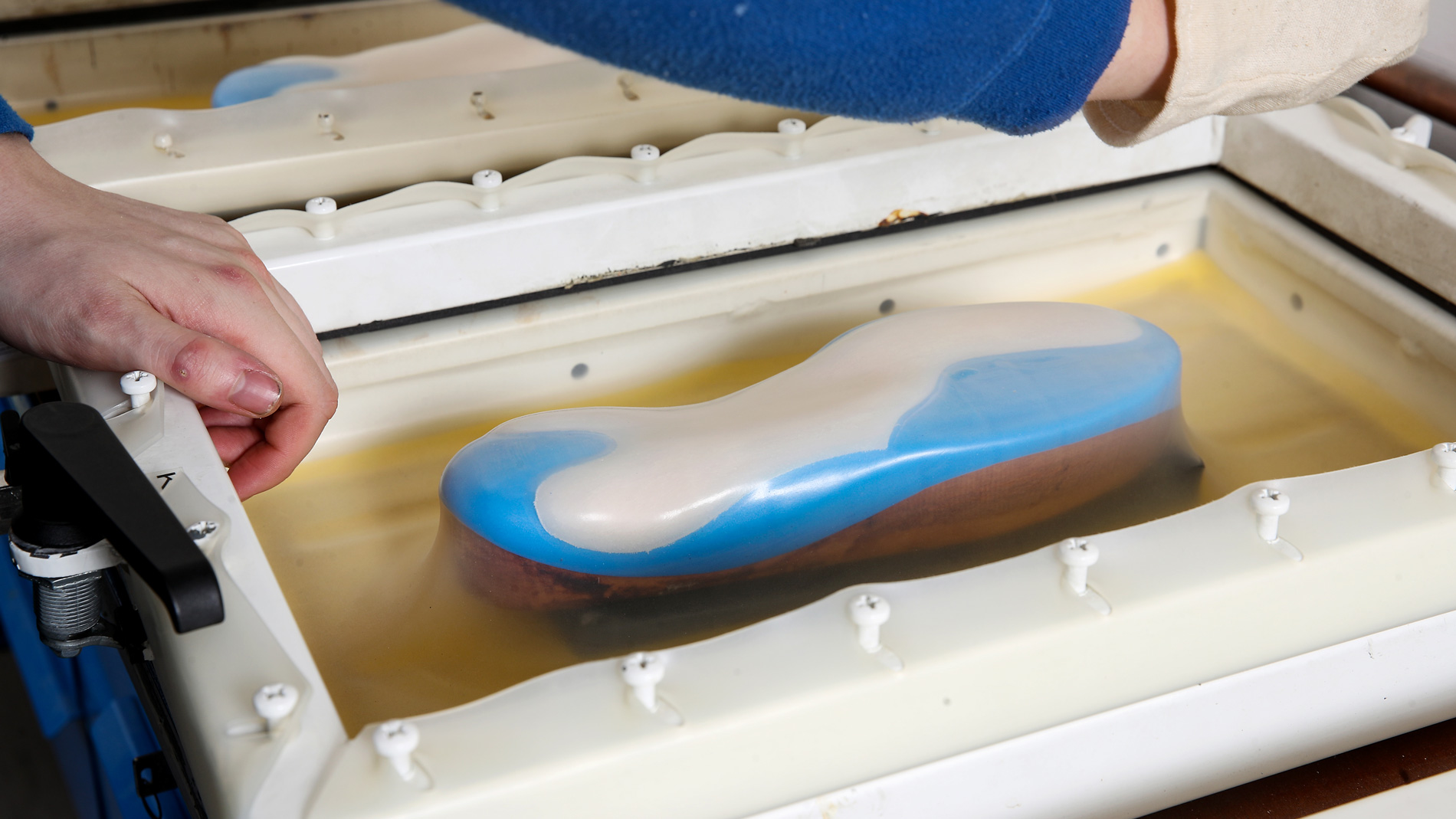
Various advantages for patients
3D printing makes the orthosis manufacturing process much more comfortable for patients too: “In the past, the arm would be put in a cast to create a hand orthosis,” explains Kriwat. After the cast had hardened, it would be cut open and poured out so that the orthopedic technician could obtain a model of the arm. The orthosis was then manufactured around this model. “This process would usually take around five days,” says Kriwat. Today, the arm is simply scanned in and the orthosis is modeled, 3D printed, and post-processed. “The patient can usually pick up the orthosis the very next day.” Nevertheless, Kriwat does not believe in using AM technology as a marketing tool for customer acquisition and, for example, placing a 3D printer centrally in the showroom, as some of his colleagues would do. “In the end, it doesn’t matter to most customers how the orthoses are made, it’s the quality and service that count.”