
Reading time: 5 minutes
Text: Thomas Masuch
A few months ago, Dr. Martin Schulze treated a 24-year-old female patient who had suffered from a bone tumor during childhood. A few years prior, she had undergone surgery to remove her femur and parts of her pelvic bone. However, a severe infection later developed in her megaprosthesis – a specialized implant supporting her leg from the ankle to the pelvis – ultimately requiring its removal.
“The risk of infection with large-scale implants is extremely high,” explains Dr. Schulze, an orthopedic and trauma surgery specialist who heads the 3D Center for Experimental Orthopedics at Münster University Hospital. While the annual infection rate for standard hip or knee implants is 1 to 2% worldwide, it rises to double digits in cases involving large implants.
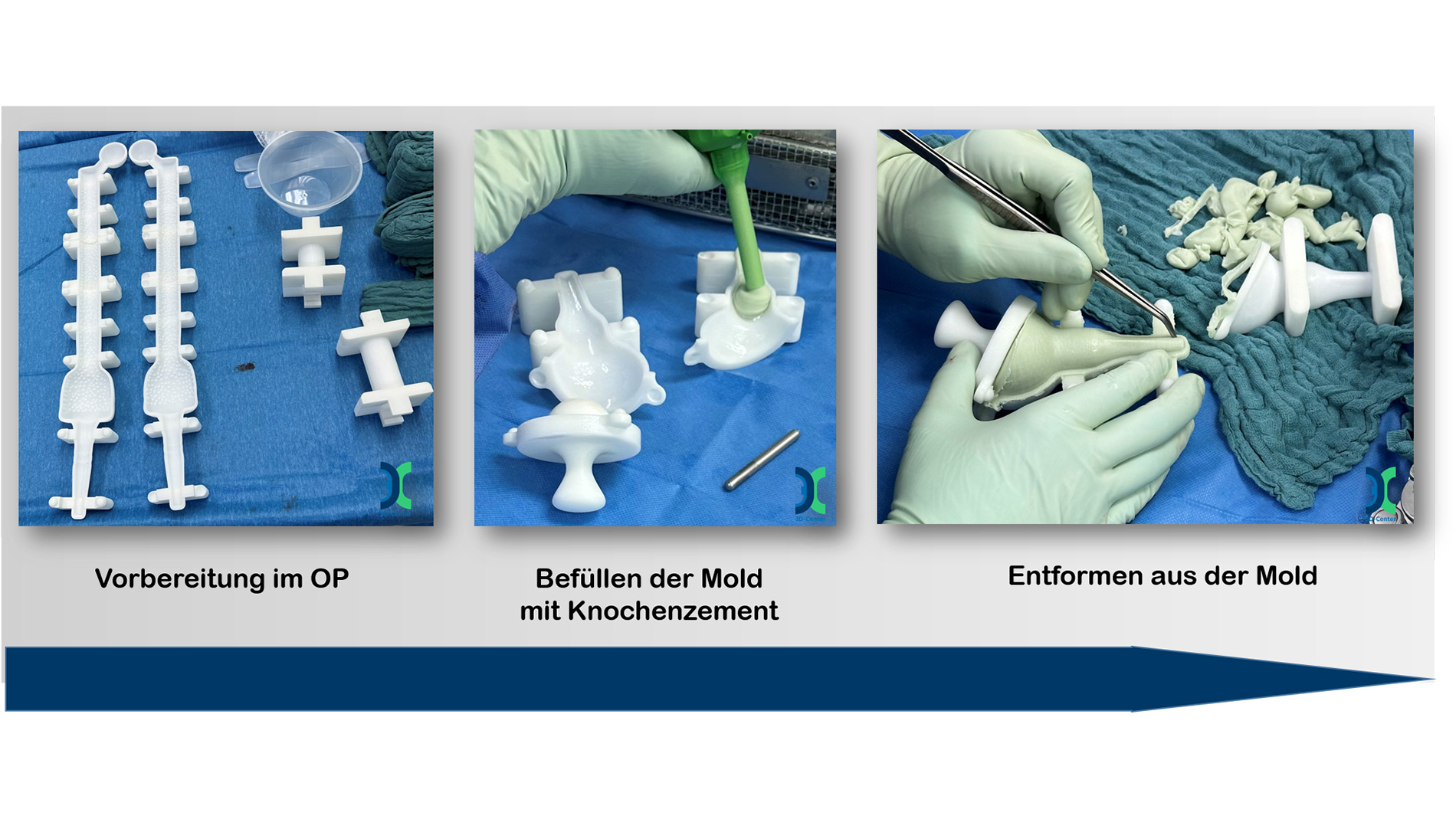
Treating a periprosthetic (implant-associated) infection is extremely complex and time consuming. According to Dr. Schulze, it typically requires a prolonged hospital stay of several weeks and can even involve multiple surgeries. To improve patient outcomes, Dr. Schulze and his team turned to Additive Manufacturing. Using custom, 3D-printed molds produced at the hospital’s 3D Center, they cast a PMMA (polymethyl methacrylate) bone cement joint spacer to temporarily replace the removed implant.
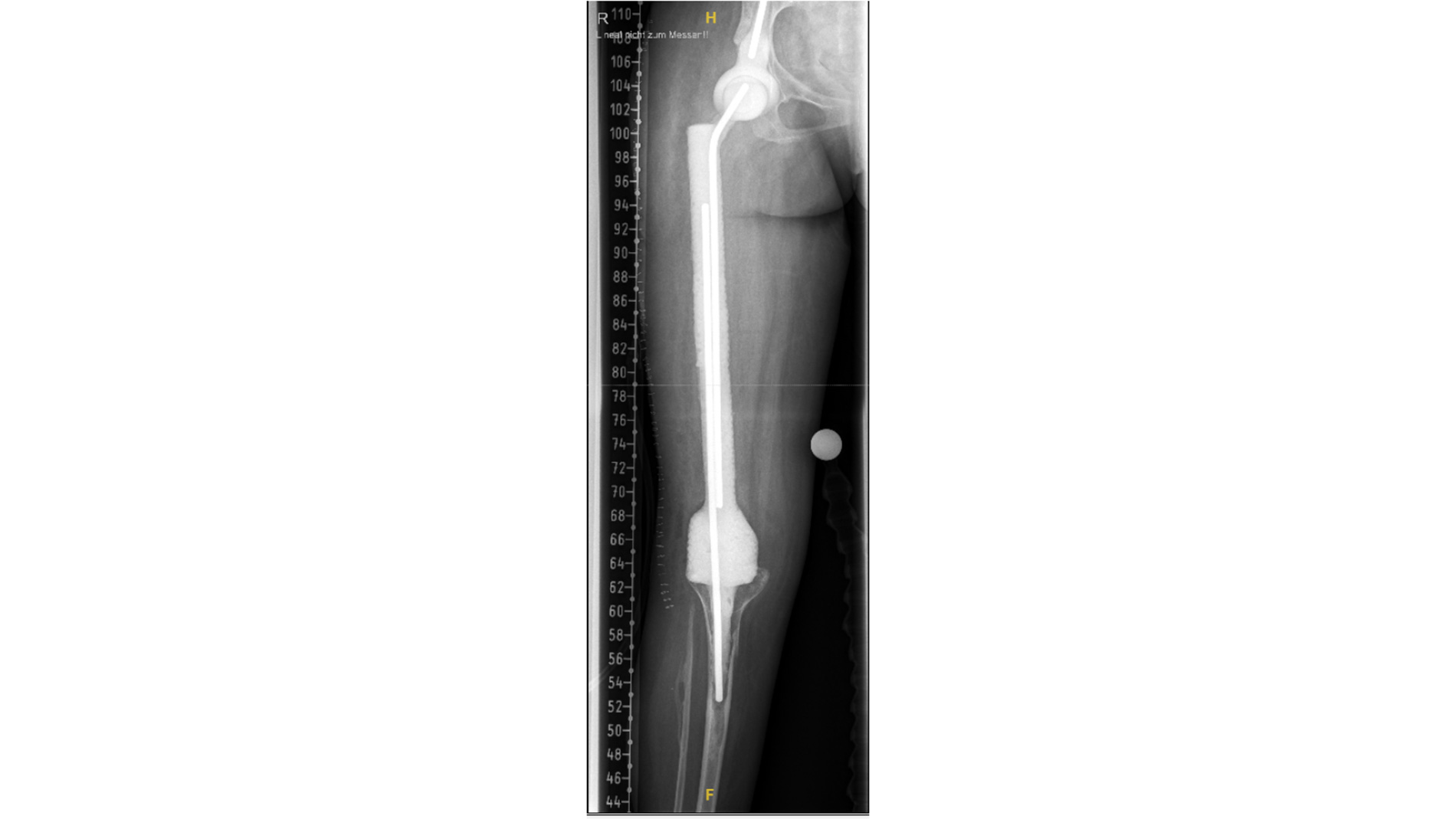
While the use of temporary spacers is common practice in fields like neurosurgery to protect the brain after a severe skull fracture, the composition and surface design of the new AM device is revolutionary. The spacer consists of bone cement mixed with an antibiotic (its official designation is an antibiotic-loaded PMMA spacer). “Thanks to the 3D-printed molds, we were able to increase the spacer’s microstructure by 70 percent, allowing for a more effective release of antibiotic,” explains Dr. Schulze. This had such a profound effect on the treatment that “it likely saved the patient’s leg.” In a subsequent surgery, the spacer was removed and the patient successfully received a new total leg prosthesis. Today, the patient has regained her quality of life and successfully returned to work.
Revision surgeries on the rise
In Germany, approximately 400,000 joint implants are fitted each year, most commonly hip and knee prostheses. Worldwide, this figure stands at around 4 million. However, several thousand revision surgeries – where the implants have to be removed – are also performed each year in Germany. As Dr. Schulze explains, while infection is a primary cause, implants can also loosen over time due to bone degradation or “simple wear and tear as the prosthesis reaches the end of its functional life.” Because of the aging population, these revision surgeries are projected to increase significantly in the future. At UKM, they already account for approximately 30 percent of all orthopedic cases.
As a major academic medical center, UKM tends to handle the more complicated cases, while standard joint replacements are performed at regional hospitals. “Generally speaking, the patients referred to us are those whom other hospitals can no longer help, who often face the very real prospect of amputation,” says Dr. Schulze.
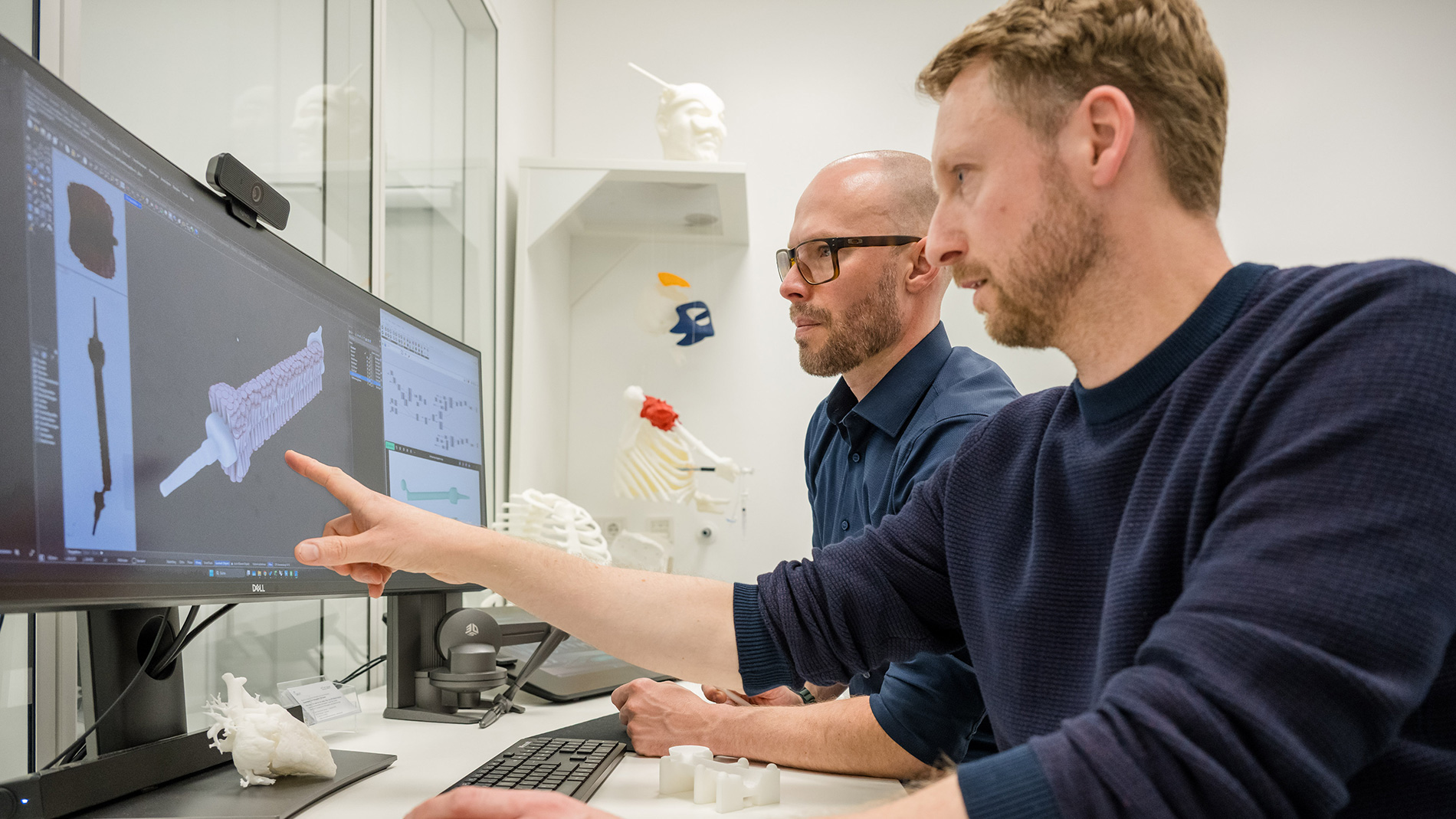
The hospital’s often experimental approaches offer “a vital last resort to potentially save limbs and avoid amputation,” Dr. Schulze adds. Moving forward, Dr. Schulze and his team aim to refine these applications and gather more clinical data. “The boundaries of patient care and research go hand in hand,” he notes. The new PMMA spacers have already been used successfully in other cases at UKM, including as a treatment for severe inflammation in knee prostheses.
Looking ahead, expansion plans for the 3D Center are already underway. The University of Münster and Münster University Hospital, in partnership with Münster University of Applied Sciences and InnoCoding GmbH, are establishing an interdisciplinary research infrastructure for medical 3D printing directly at the point of care. The project has a total budget of approximately €3.9 million, including around €3.5 million from the ERDF/JTF Program NRW 2021–2027 (utilizing funds from the European Union’s European Regional Development Fund and the state of North Rhine-Westphalia). The aim of the project is to employ Medical Device Regulation-compliant processes, new testing methods, and digital and AI-supported workflows to accelerate the research, validation, and clinical use of patient-specific applications of additive manufacturing, including implants and innovative coatings.