
Reading time: 2 minutes
Text: James Woodcock
Evaporative cooling is old technology. Clay jugs and wind towers have used it for centuries, drawing heat from the air as water changes phase. What researchers at the Institute of Architecture and Media at Graz University of Technology have added is the geometry.
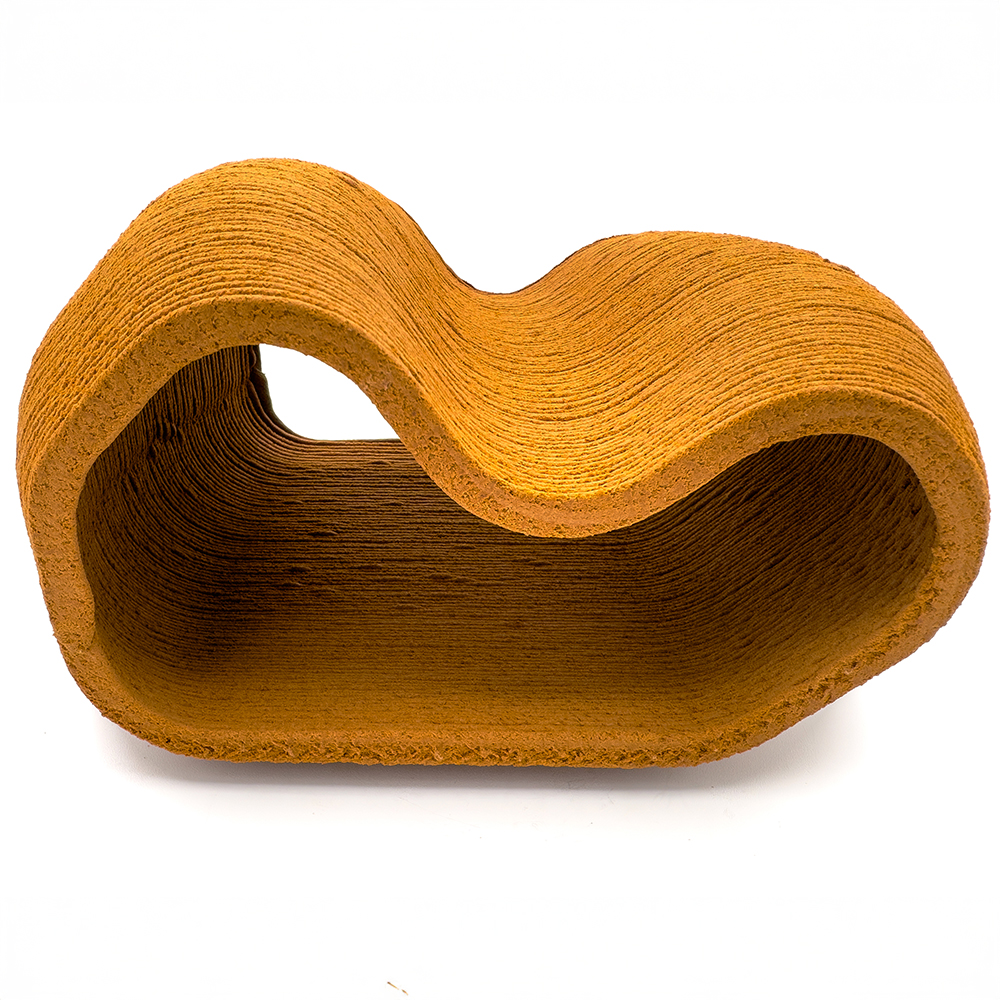
The team 3D prints cubes roughly 23 centimeters on a side from a ceramic clay mixture, using a triply periodic minimal surface geometry that maximizes surface area for minimal material. Firing at deliberately low temperatures leaves the structure highly porous instead of vitrifying it. Water enters by capillary action, spreads through the geometry and evaporates across a very large area. "The key technological advance here lies in the use of 3D Printing," said Milena Stavric of TU Graz, pointing to the complex, porous and functionally optimized geometries the process allows from clay.
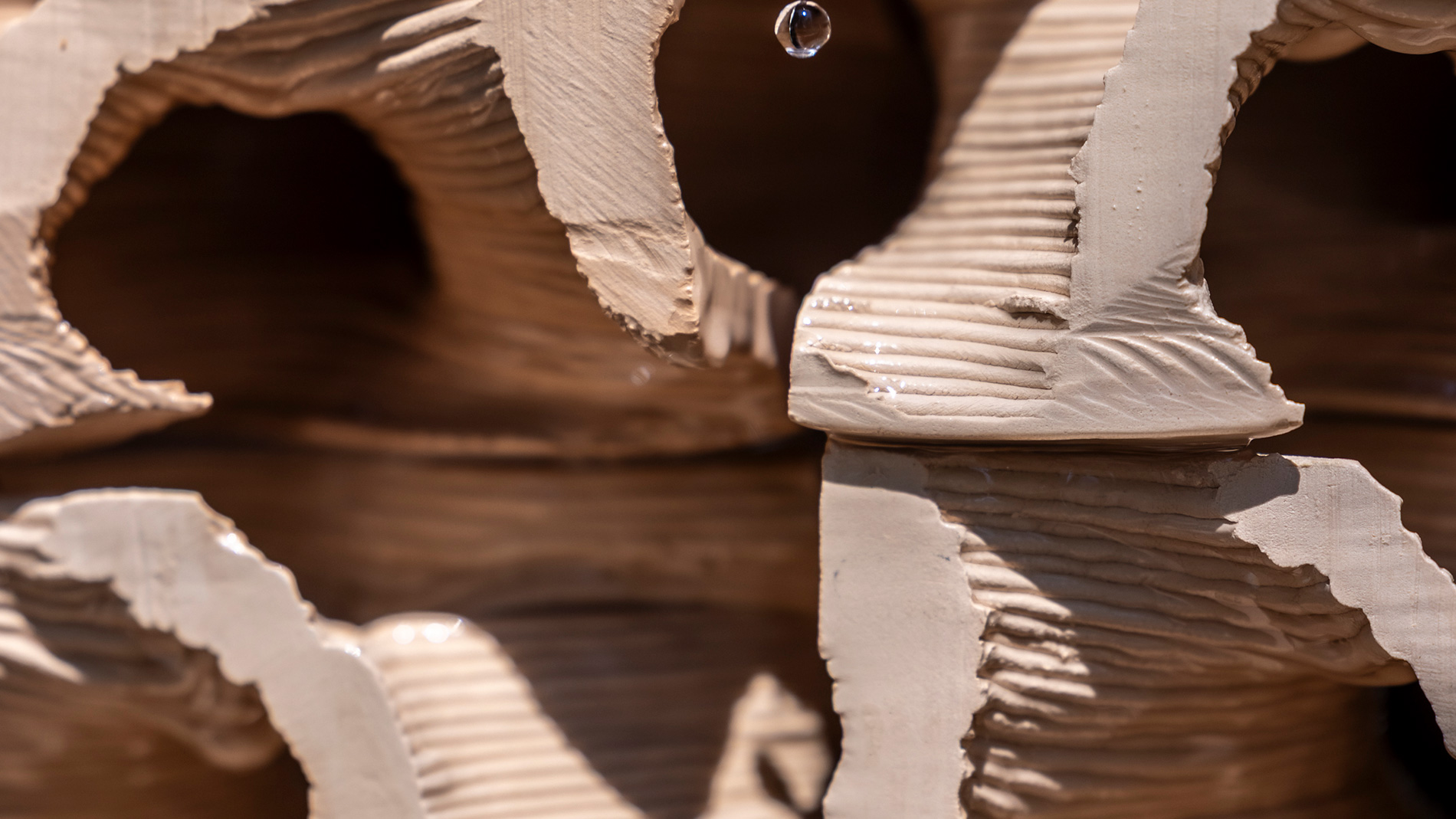
In a field test in a hot campus attic, a single water-filled cube lowered nearby air temperature by close to 7 degrees Celsius. A demonstration wall now stands on campus.
Material work continues alongside the geometry. The institute's Shape Lab is testing clay blended with mushroom cultures and wood shavings, where mycelium grows into the material then burns away in firing, leaving micro and macropores that improve water distribution. Dredged mud from Lake Neusiedl, previously discarded as waste, is a second feedstock under test.