
Reading time: 6 minutes
Text: Thomas Masuch
In 2018, DB ESG began its journey into Additive Manufacturing (AM) through a collaboration with the rolling stock leasing company Angel Trains aimed at extending the service life of older trains affected by obsolescence. “For a whole range of replacement parts, the moulds and tools were no longer available; sometimes the manufacturer had even gone out of business,” recalls Martin Stevens, who has worked in the British railway industry for 25 years in Derby, the UK’s railway hub, and is now Chief Engineer at DB ESG. The solution typically involved reverse-engineering the components to be repaired by scanning them, converting them into printable data and 3D printing them.
DB ESG is a leading specialist provider of rolling stock engineering solutions for the UK rail industry. Founded in 1995, DB ESG is part of Deutsche Bahn and currently employs 65 people. Among other things, the company assists OEMs with quality control for trains as well as approval and certification. DB ESG also supplies spare parts for trains in service and customises trains to meet operators’ specific requirements. Extensive modifications are a key business area for the company, one example being the refurbishment of part of the underframe on one of London Underground’s fleets, including design, engineering and installation support. “Alongside this, however, we also have hundreds of smaller projects involving the replacement or addition of minor components,” explains Martin.
Like its counterparts in many other European countries, the British railway system is characterised by a number of historically developed peculiarities. As a result of privatisation in the mid-1990s, the rail network, trains and train operations are each owned by different entities. The trains belong to “rolling stock companies” such as Angel Trains, Porterbrook or Beacon Rail and, until now, have been leased to private operating companies. Since 2024, the British government has been working to gradually transfer operations back to a new state-owned company, Great British Railways (GBR).
Large-scale projects and slow adoption of innovation
The British model also shares significant similarities with almost all other rail systems worldwide: “In general, the railway industry is a sector that adopts innovations rather slowly, partly due to high safety standards,” says Martin. “At the same time, there are truly large-scale projects in the industry, for example, new train procurement contracts worth over a billion euros or more. A contract of this size, however, would deliver just 70 trains, so the component batches are almost always quite small.” Manufacturing injection moulds specifically for such short production runs is usually not economical. And this is where Additive Manufacturing almost automatically comes into play.
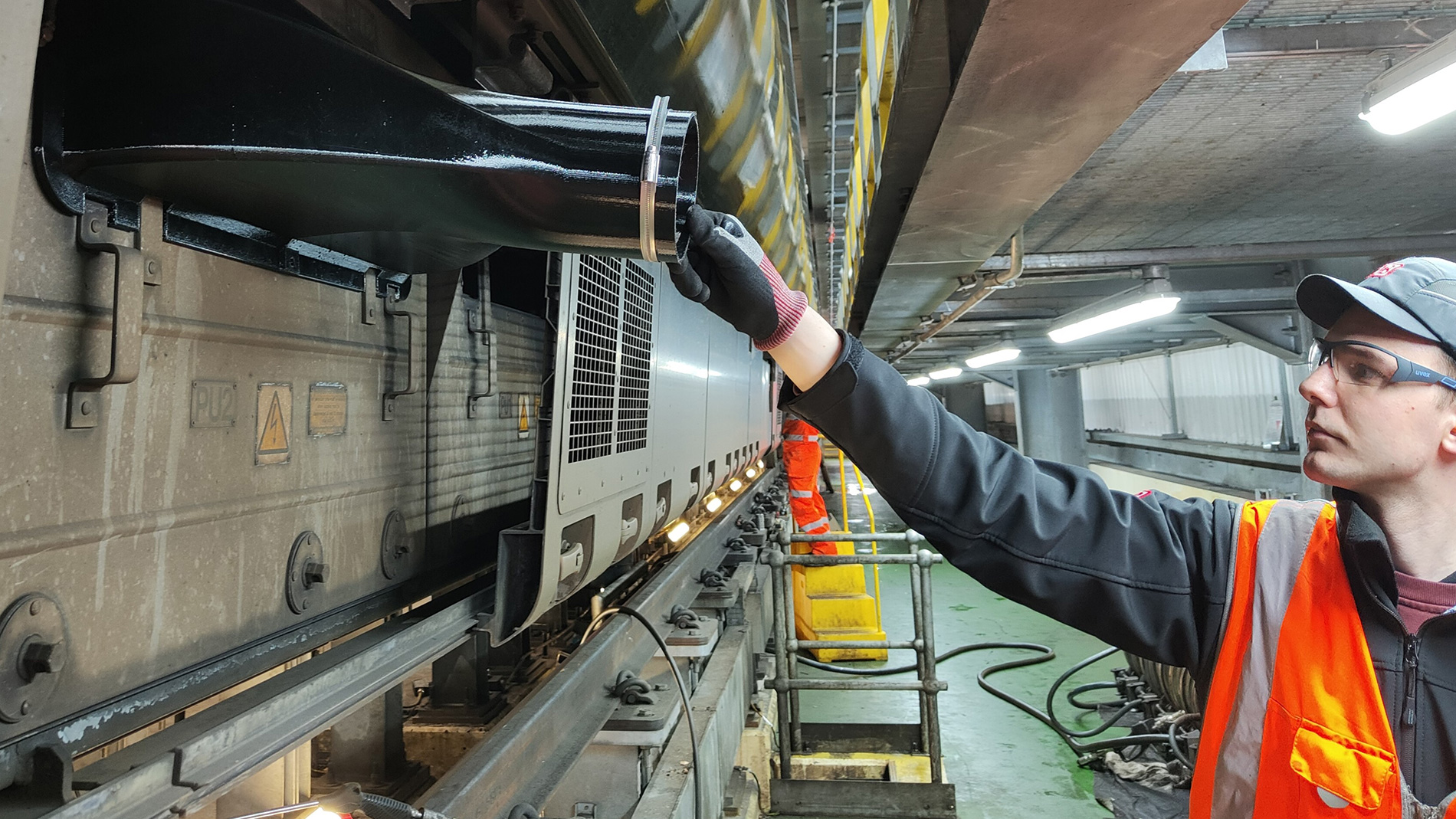
DB ESG produces an extensive range of 3D-printed components ranging from switches on driver consoles to various handles, armrests and brackets as well as the housing for a train phone (on the London Underground), which was optimised for increased durability. Even on new trains, adjustments are often necessary. In one new train, for example, bright sunlight made it difficult to see whether some buttons in the driver’s cab were illuminated. The solution in this case was a custom-made cover. Certification for non-structural components like these is rarely a major problem, provided a fire-retardant material compliant with railway standards is used. The situation is different for larger metal components such as a 22-kg cast iron yaw damper mounting bracket. In this case, the component was indirectly 3D-printed using rapid casting and then cast using “traditional” methods. The advantage of this method is that the new components do not need to be recertified. DB ESG has also developed numerous labour and time-saving tools for repairs and cleaning.
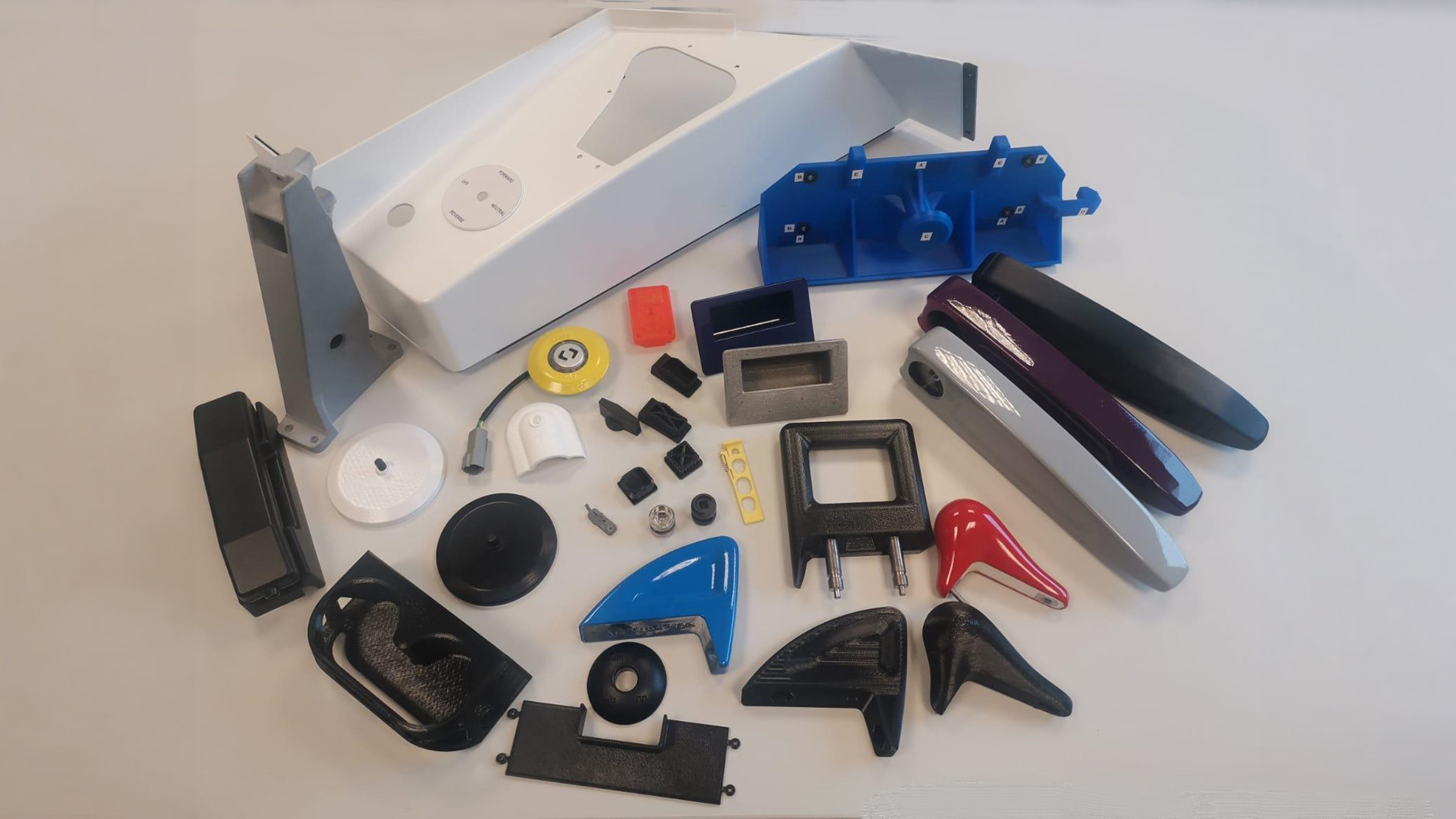
Many of the required components (prototypes, most tools and some end-use parts) are manufactured in-house using six FFF systems. DB ESG also collaborates with various service providers, including those specialising in SLS components or specialised metal materials. According to Martin, the company’s own printers run 70 percent of the day, demonstrating how Additive Manufacturing now covers a significant portion of DB ESG’s overall parts requirements and “is now well integrated into the company. All of our engineers are familiar with AM and the benefits of the technology.” 3D-printed components are also frequently used in marketing to emphasise that DB ESG is “one of the most innovative British engineering firms in the railway sector.”
Martin is keen to expand the scope of Additive Manufacturing even further within his area of work. Finding the right applications, however, is no easy task, “because, after all, it’s not us who have a problem with the train, but our customers and partners.” That’s why DB ESG has been holding “lunch-and-learn sessions” for the past four years to increase awareness of the benefits of AM technology among its partners’ employees as well. “Our goal is to find one or two enthusiastic champions in every department who will drive AM forward.” Martin has found that younger members of middle management (fleet performance managers and obsolescence managers) tend to be more enthusiastic about new technologies than experienced engineers who are more set in their ways or top managers who are under intense pressure to get trains back on track quickly. “Because even though AM offers many advantages, you have to be willing to put in a little extra work now and then at the beginning.”