
Readine time: 6 minutes
Text: Thomas Masuch
The automotive industry may be going through a tough time, particularly in Europe, but the sector remains an attractive market for Liqtra’s additive solutions for series production: “Things are going very well for us right now,” reports co-founder and technical manager Joscha Krieglsteiner. “Bucking the general trend, we’ve grown steadily in recent years thanks to projects in the automotive industry and still have numerous new projects in the pipeline,” he says happily. Today, the company – founded in 2019 – employs 14 people, most of whom work in technical roles.
The automotive sector is Liqtra’s most important market. Here, high-volume production with a high material throughput is found to an extent rarely seen elsewhere. “The projects for Additive Manufacturing – especially in series production – are there; often, the only thing missing is the technical expertise to implement them,” says Krieglsteiner. Customers are typically Tier 1 suppliers with the freedom to decide whether to implement innovations.
Technology provider and engineering firm
The company’s successful growth is also down to the founders’ determination to remain flexible. “We started with a technical idea for high-productivity material extrusion and turned it into machines,” Krieglsteiner recalls. “However, even four years ago, it was already becoming clear that off-the-shelf 3D printers in the filament sector were a difficult business,” primarily due to price competition with Chinese suppliers. “That’s why you have to look for niches that are harder for companies from China to reach.” For Liqtra, this niche involves being both a technology provider and a creative engineering firm for Additive Manufacturing: “We are a partner for the development of technically sophisticated custom solutions.” Given its flexible growth trajectory, the young company also benefited from having founders who have always been self-directed and free from external influences like the requirements of venture capital investors. This has allowed them to hold on to the freedom they need to develop their business model in line with market conditions. “Given the economic circumstances, that was also the right approach,” says Krieglsteiner. After all, the days when versatility was a key selling point for 3D printers are over. “With the increasing maturity of mass-production applications, the topic of customisation has come to the fore in recent years. Mass production does not require great versatility but benefits from the performance gains and cost advantages achieved through the application-specific optimisation of a machine.”
Shifting the economically viable production volume
When developing special-purpose machines, Liqtra always starts with a specific application. “We need a use case – ideally involving large parts and high production volumes,” explains Krieglsteiner. New machines are then built for each suitable application, with core technologies and components from the fields of extrusion and software being reused across the board. However, features from the field of traditional mechanical engineering – such as the build volume, the number of print heads, the installation of additional axes, and process automation – are customised. The custom machines (or production modules) are then integrated into existing production lines.
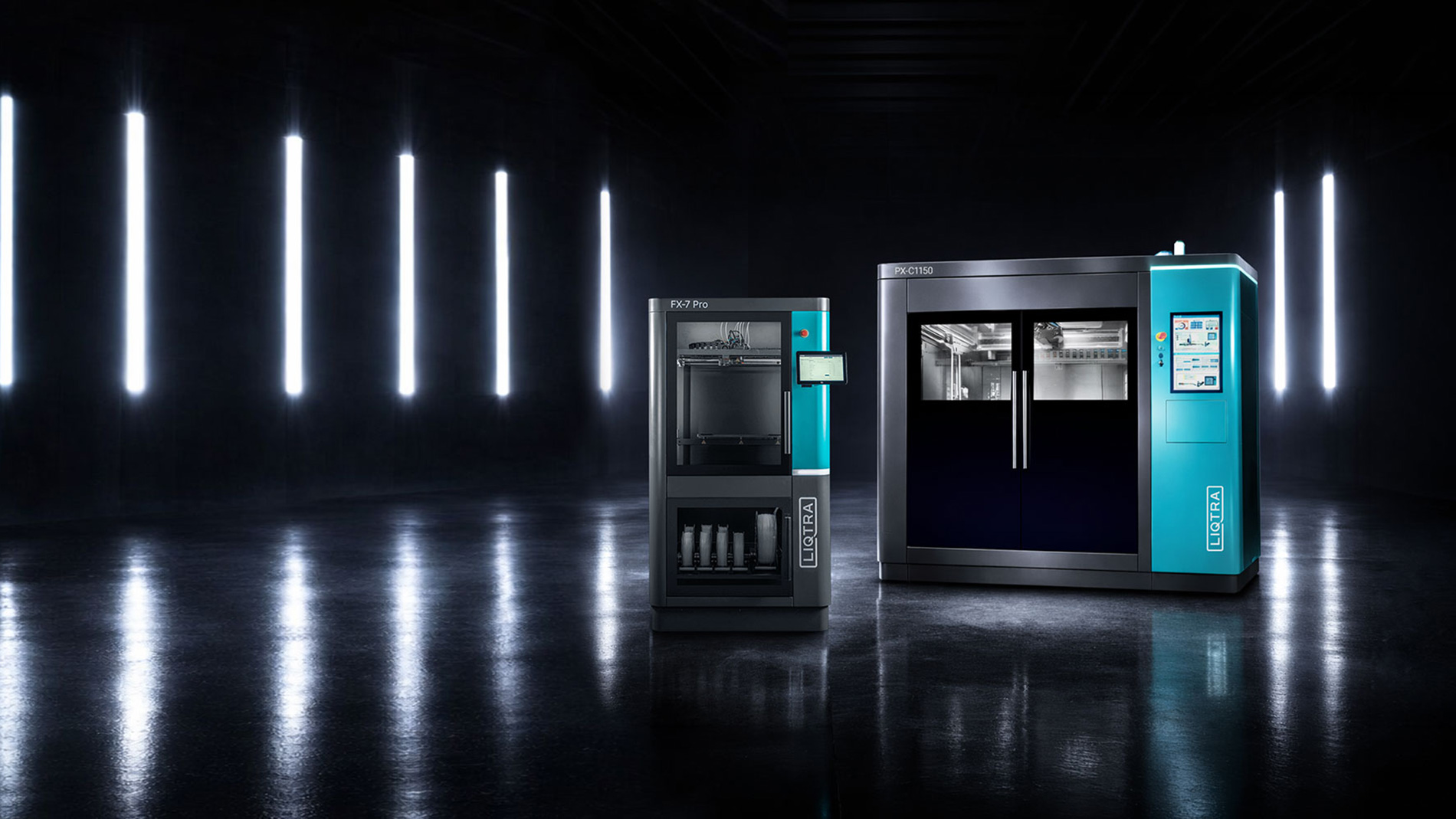
In addition to its customised options, Liqtra also offers standard machines: the FX Series (filament printing) and the PX Series (pellet printing). “For mass production applications, these typically serve as a foundation for optimising components and processes in collaboration with the customer and deriving specifications for the custom-built system for mass production,” says Krieglsteiner. Pre-series production and qualification begin on these machines. “In this case, our standard machines serve as enablers. However, making the leap to a custom machine for series production only makes sense for very high production volumes.” Custom machine design for series production then involves, for example, scaling kinematic axes or integrating multiple printing systems into a single machine. “This allows us to increase productivity and reduce component costs with relatively little effort. With this approach, we’re pushing the upper limit of production volumes at which 3D printing makes economic sense even higher.” Even though some projects require more than a year of development work, Krieglsteiner says the effort often pays off even if it results in just a 10 percent reduction in component costs.
Mass production for the automotive industry
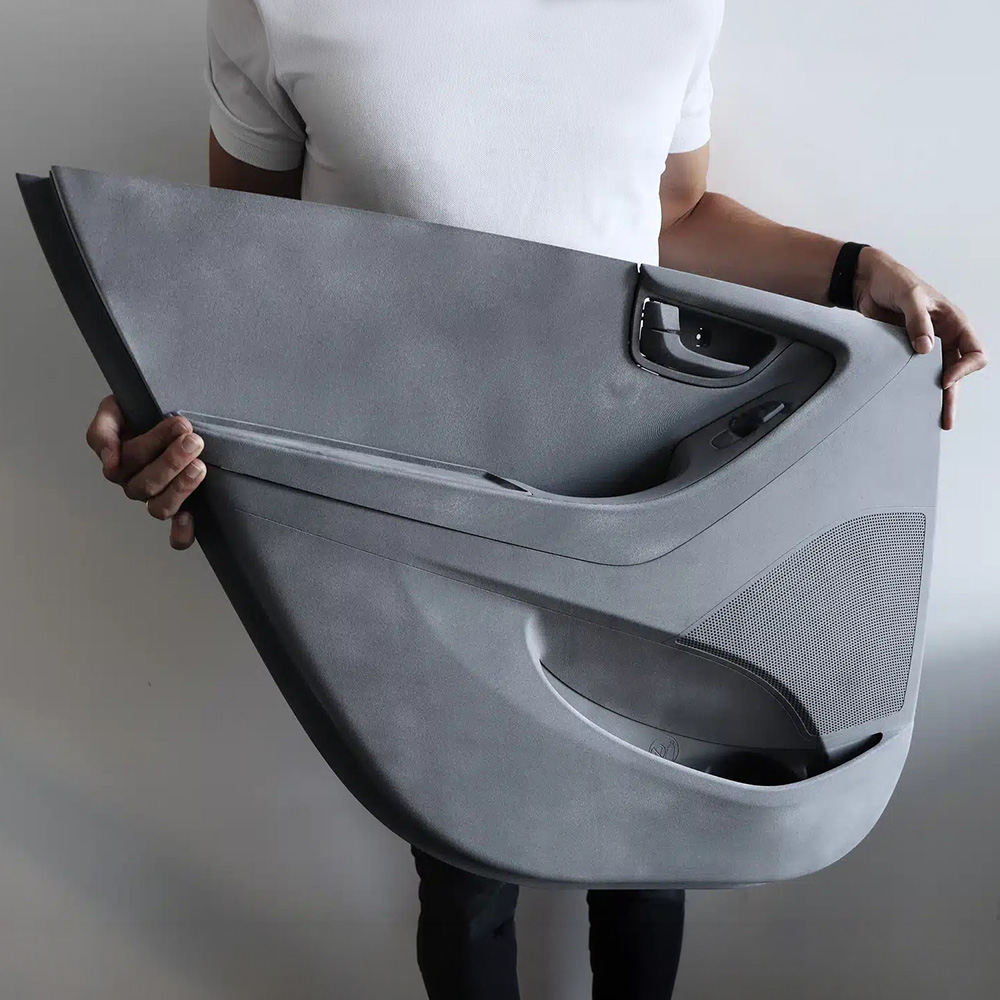
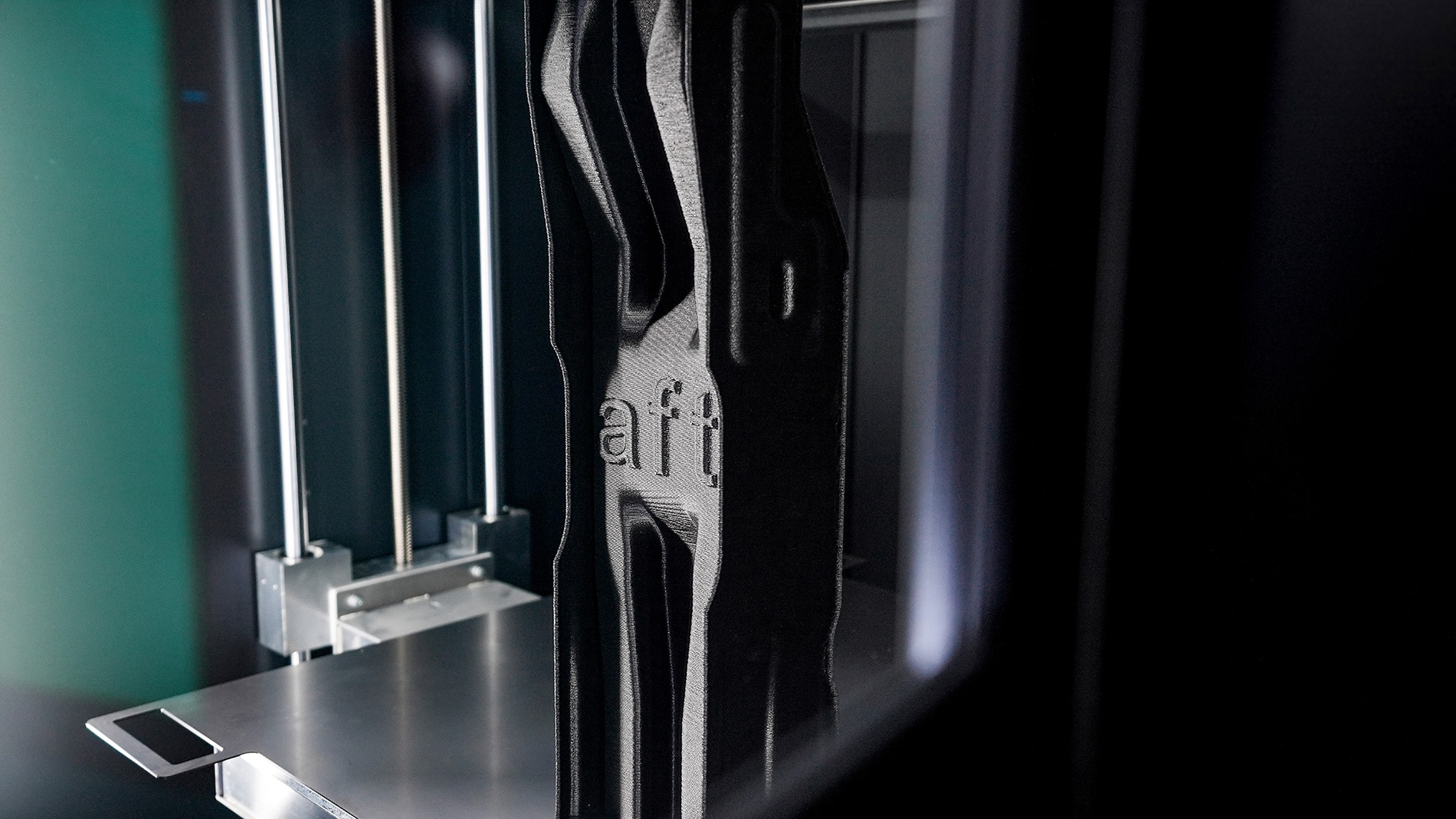
At Liqtra, pellet printing is generally used for high-volume production of large-format components, where plastic pellets have clear cost advantages over traditional FDM filament. This made it possible for Liqtra to carry out a project that made headlines in the automotive industry: A pellet 3D printing system was developed to 3D-print a metre-high structural component for the Tier 1 supplier AFT Automotive. A number of benefits have already been achieved: for example, cost savings due to the reduced assembly effort required for the additive monolithic construction and the lightweight construction achieved by eliminating fasteners.
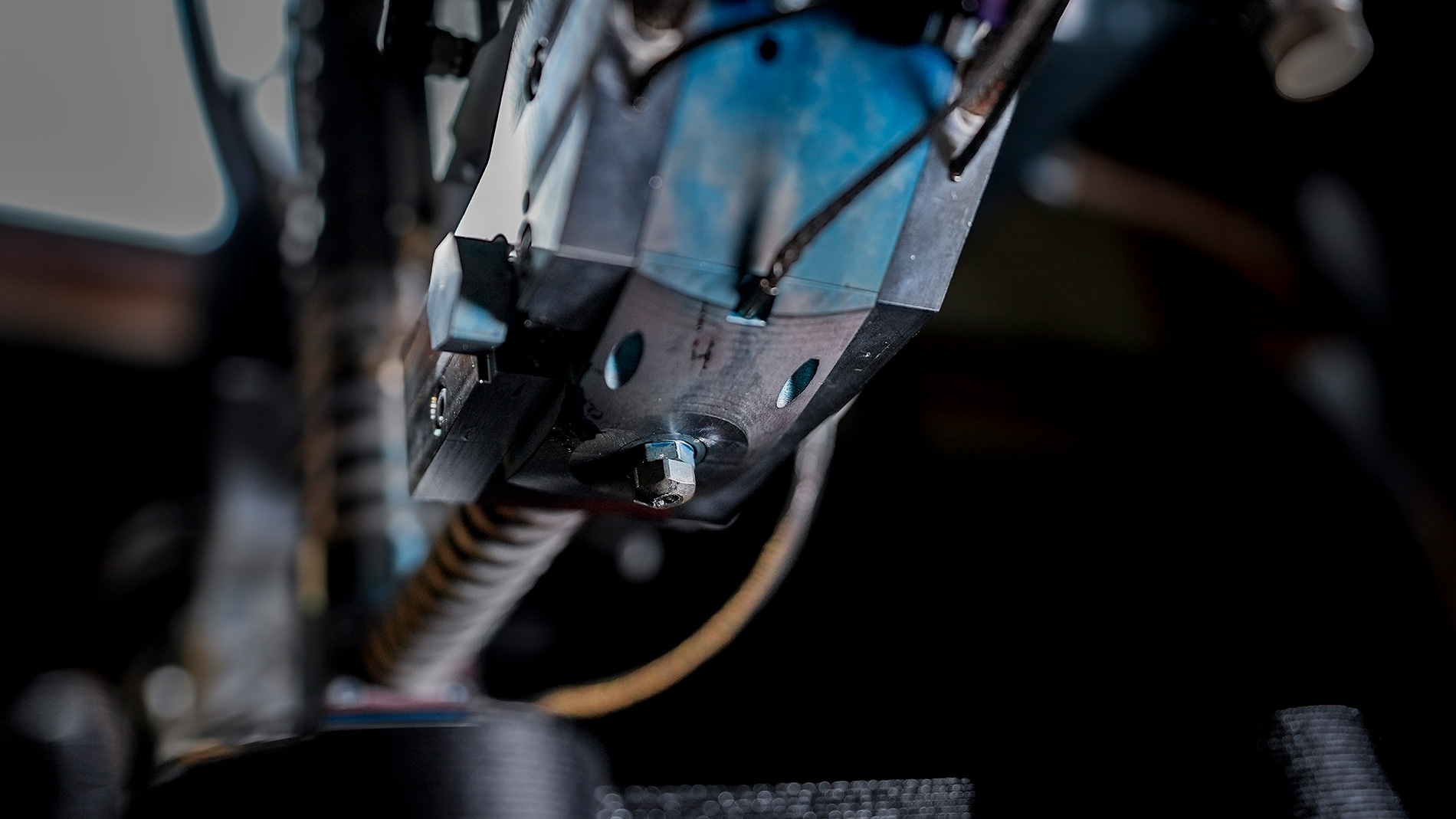
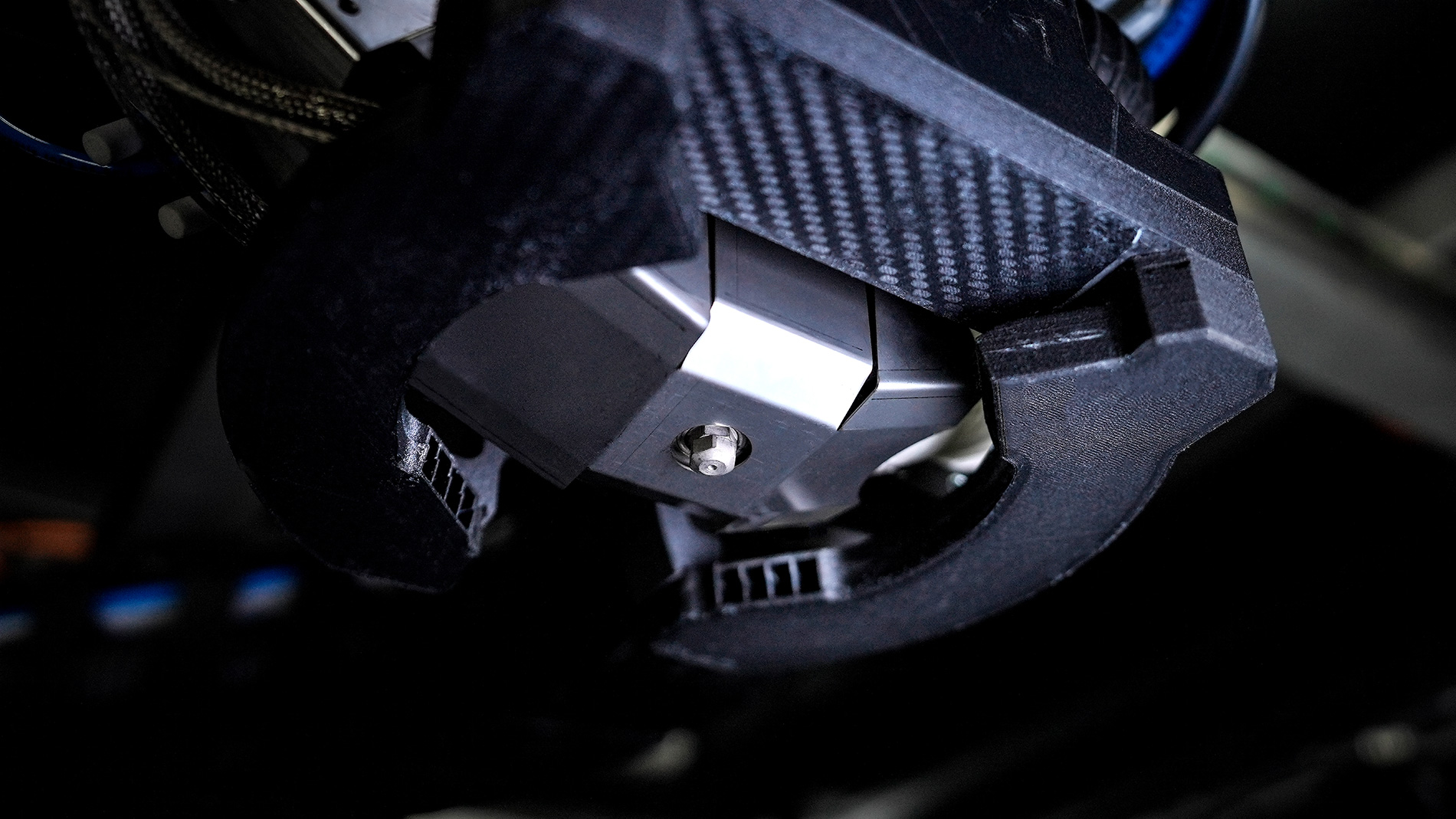
Krieglsteiner explains that the project required a specialised system and could not be implemented with an off-the-shelf 3D printer due to the technical peculiarities of pellet printing: “As a rule, pellet printers cannot cleanly interrupt the print process, for example, to move over open spaces. This usually results in stringing.” This shortcoming is often circumvented by printing in spiral patterns so that the printer does not have to stop. Liqtra has solved this problem with a special patented nozzle that, according to Krieglsteiner, can cleanly stop and resume printing. As a result, Liqtra’s granulate-based processes are not limited to spiral vases or continuous extrusion but offer a degree of freedom that was previously only possible in filament-based processes. Ultimately, this means material savings of up to 30 percent for customers’ applications.
Further information
Liqtra at Formnext 2026: Hall 12.1, Booth E91