
Reading time: 6 minutes
Text: Thomas Masuch
Ten years later, the network provides concrete answers – ranging from new standards and approval procedures to more than 200,000 additively manufactured components in the rail sector. For Managing Director Stefanie Brickwede, the focus has shifted from technological feasibility to promoting industrial applications.
When MGA launched in 2016 with nine founding members, the initial focus was on connecting companies in the railway sector. Stefanie Brickwede, who was already head of the Additive Manufacturing division at Deutsche Bahn at the time, was looking for solutions to obsolescence and the long-term supply of replacement parts, since – due to the long service life of trains – many replacement parts were either no longer available or very costly to procure. “We quickly recognised the potential that AM offers here – but only if manufacturers, suppliers, service providers, research institutions and certification bodies collaborate with end users.”
The network now has around 140 members and has expanded its activities far beyond the mobility sector. In addition to rail, dedicated working groups now focus on areas such as aerospace, construction, lifestyle and medical technology, and defence. This is accompanied by international collaborations, political advocacy, and events and technology programmes that foster exchange among users, manufacturers and research institutions.
For Brickwede, however, growth is not an end in itself. What is far more important is that the network’s members can learn from different perspectives as well as the common ground they share. The development of standards plays an important role in this. “As the industry matures, these standards become increasingly important,” she says.
One example is DIN 52920, which emerged from collaboration within the network and defines criteria for the qualification of additively manufactured components. Especially in regulated industries such as rail transport, standards are an essential prerequisite for approving components and putting the technology to use in industry. MGA therefore not only supports the work of various DIN and ISO committees but also intends to contribute financially to DIN’s activities in the future.

In addition, the network organised a “ round-robin” test, in which, for example, the quality of additively manufactured aluminium components from various service providers and users was compared. The goal of these tests is to demonstrate the reproducibility of manufacturing processes and thereby further strengthen confidence in industrial AM processes.
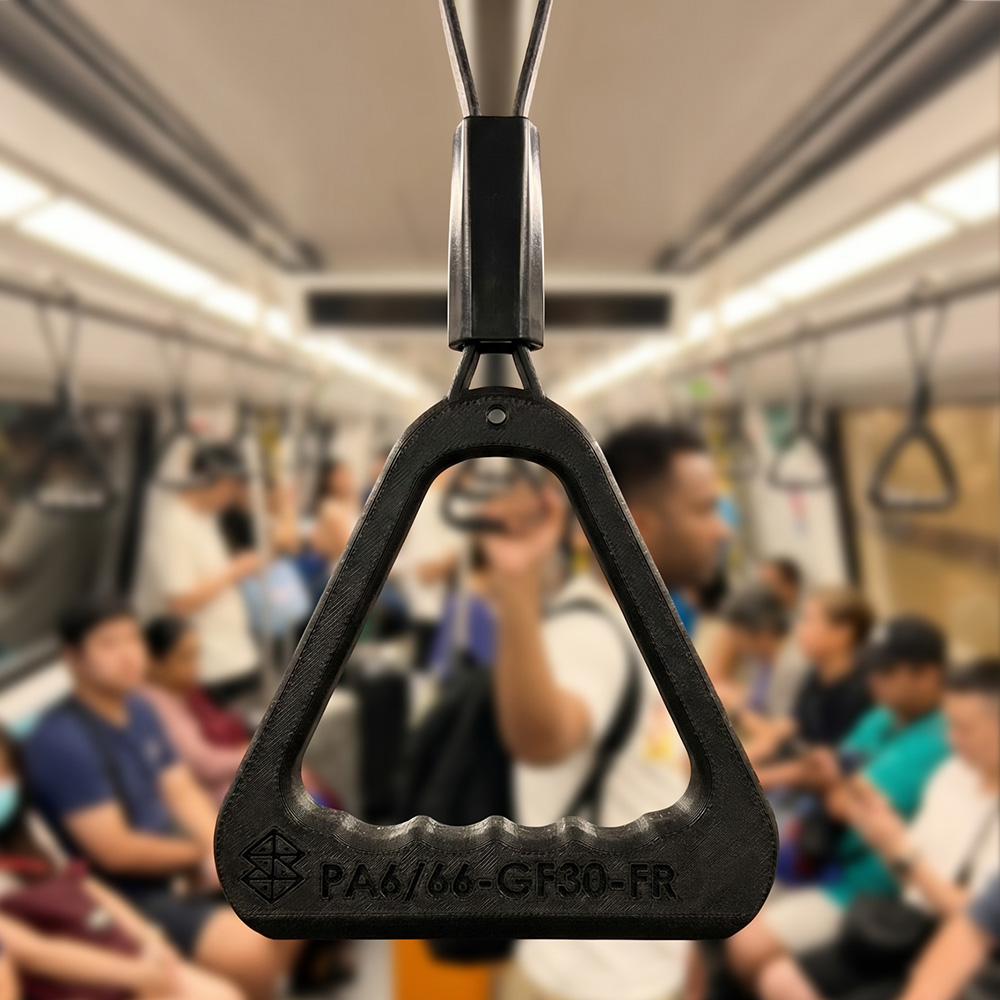
Just how far the transition from pilot applications to industrial use has come is particularly evident at Deutsche Bahn, the initiator and sponsor of MGA. There, more than 200,000 components have already been additively manufactured and over 1,000 different applications have been implemented. Both replacement parts and production and operational equipment are being printed – ranging from drilling templates to flame-retardant plastic components for passenger compartments. Twelve different AM processes are used, with metal components primarily manufactured in collaboration with specialist service providers.
Brickwede sees particular potential in the digital supply of replacement parts. Deutsche Bahn alone keeps replacement parts worth around 1.8 billion euros in stock. According to MGA’s estimates, about 10 percent of these components could be produced as needed using Additive Manufacturing. Many of these parts are rarely needed, are no longer available from the original manufacturer, or have previously had to be procured in minimum quantities that are economically unfeasible. Digital spare parts warehouses and on-demand manufacturing could reduce storage costs while simultaneously increasing availability.
This trend is also reflected in new procurement strategies. For example, procurement contracts with Deutsche Bahn and Dutch State Railways now include requirements stipulating that it must be possible to produce a portion of the components using Additive Manufacturing. The goal is not to print as many parts as possible, but to utilise Additive Manufacturing where the technology offers economic or logistical advantages.
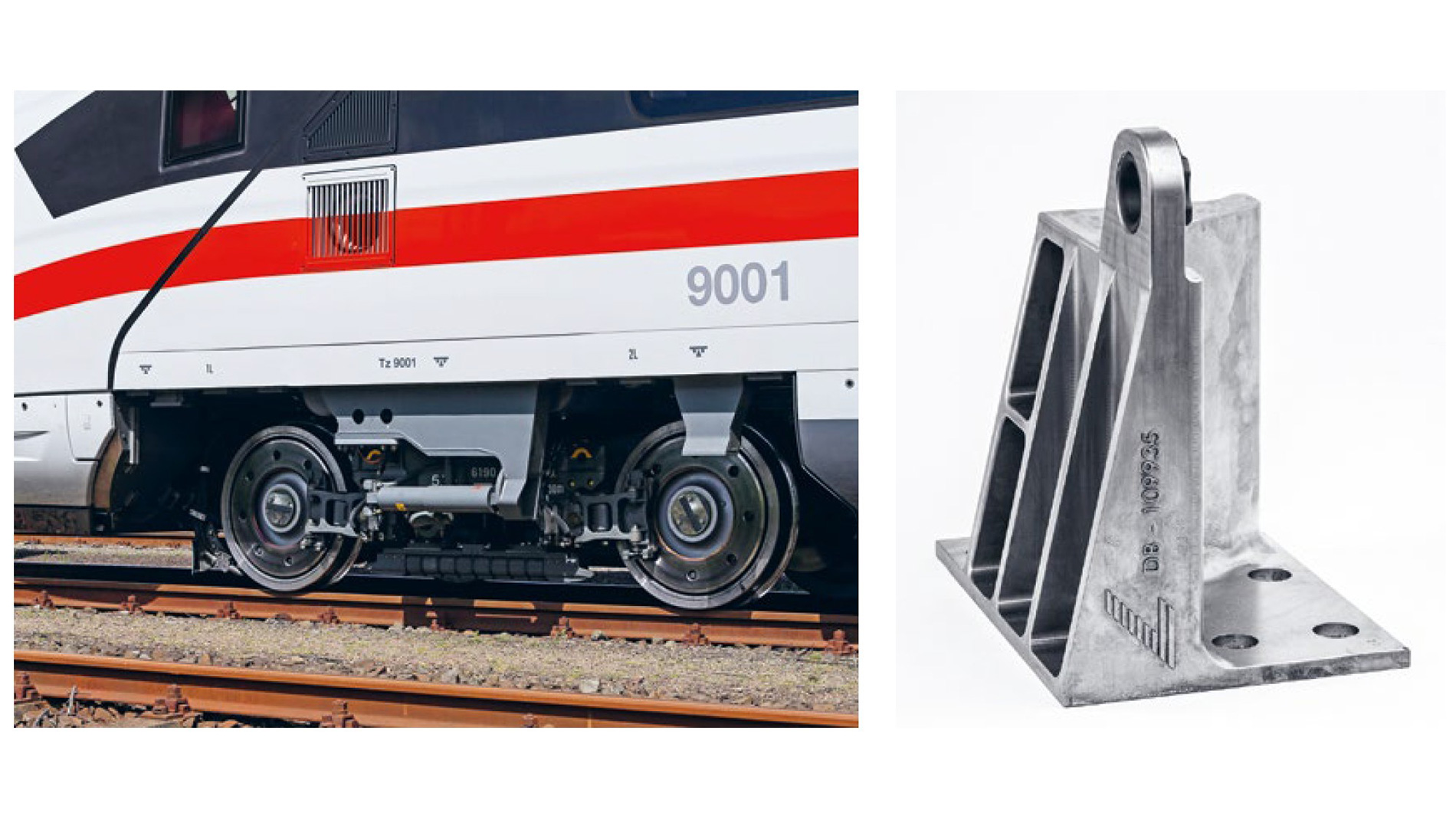
“There is also significant untapped potential in applying this to related industries, such as local public transit, since the framework conditions are very similar to those in rail transport,” explains Stefanie Brickwede. The associated MGA working group is set to meet during Formnext to provide public transit companies – many of which have only recently become involved in the AM sector – with comprehensive insights and opportunities for adaptation.
While MGA initially focused primarily on public transit and rail transport, its focus is now expanding to include other industries. For example, the network regularly hosts the European Healthcare Forum for Additive Manufacturing (EHFAM) and established a defence working group three years ago. Together with other initiatives, such as the Resilience Technology Campus in Berlin, the goal is to further expand networking between defence companies and the AM industry. Brickwede notes that geopolitical developments have indeed increased the pressure to innovate. Nevertheless, this must not lead to a neglect of established certification and quality requirements. “We can’t throw everything overboard – we still have regulations that must be followed.”
Ten years on, Brickwede therefore sees the network as being at a different stage than when it first began. While the focus was initially on identifying where Additive Manufacturing could be used at all, the emphasis today is increasingly on reliably scaling the technology. In her view, standards, certification and collaboration across the entire value chain will be crucial to ensuring that successful individual projects become an integral part of industrial production and supply chains.
Additional Formnext specials focusing on AM in automotive, transportation and mobility
- Formnext Technology Talk, 23 September, 3:00 p.m. CEST, with Stefanie Brickwede and other industry leaders
- Free whitepaper featuring application examples from Deutsche Bahn, Daimler Truck & Buses, Siemens Mobility, Sakuu, and BMW Group at formnext.com/mobility