
Reading time: 8 minutes
Text: Thomas Masuch
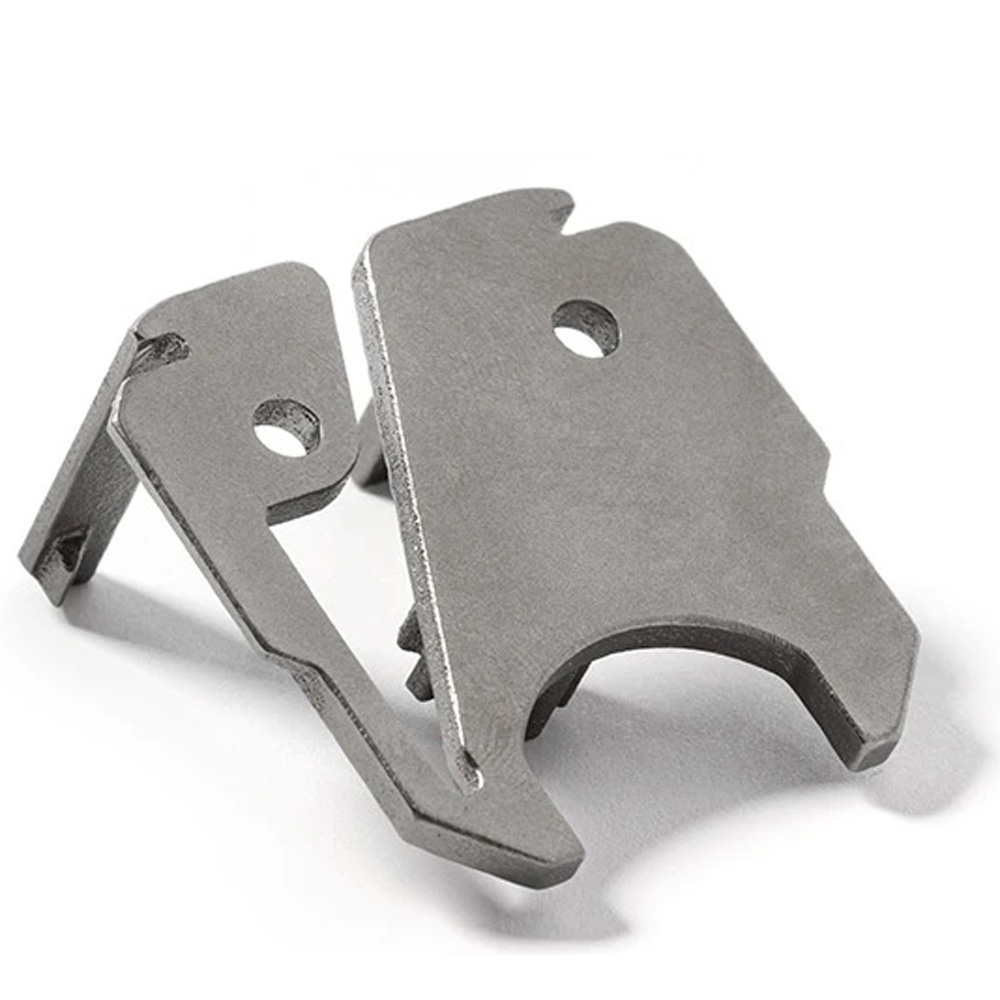
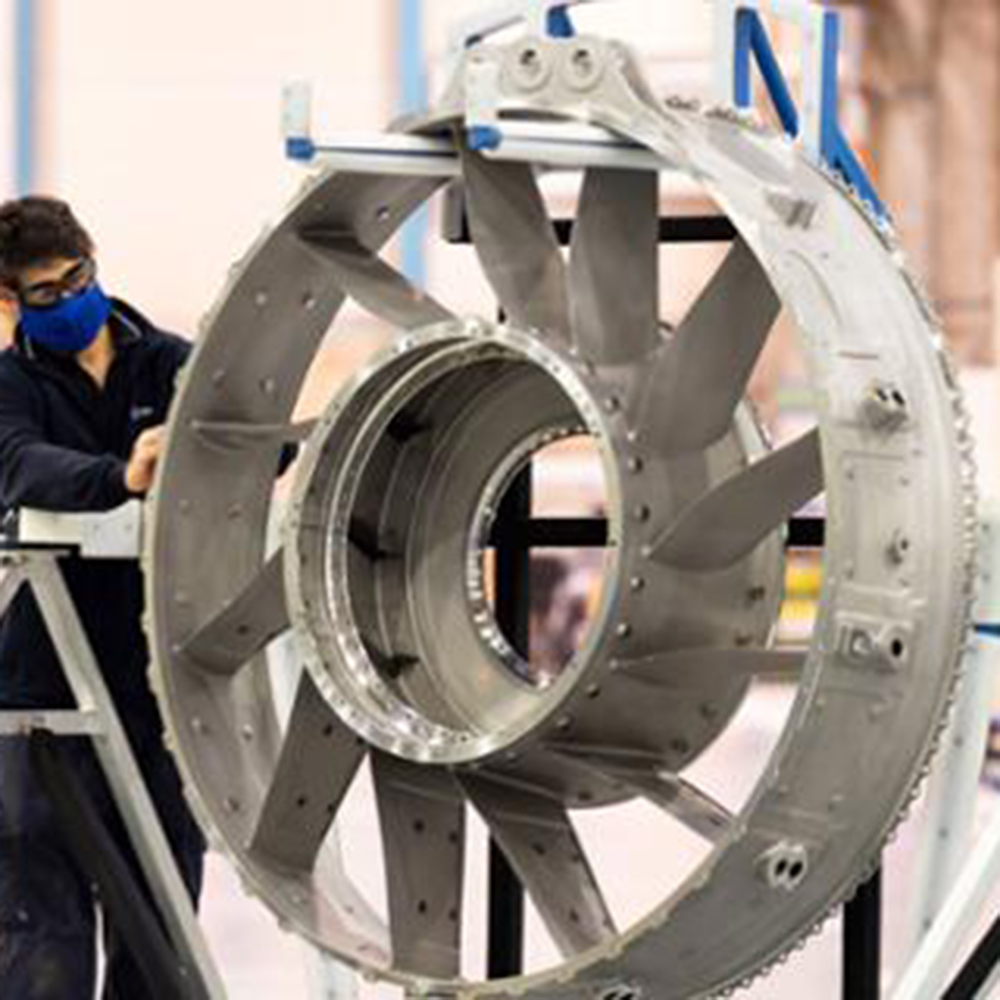
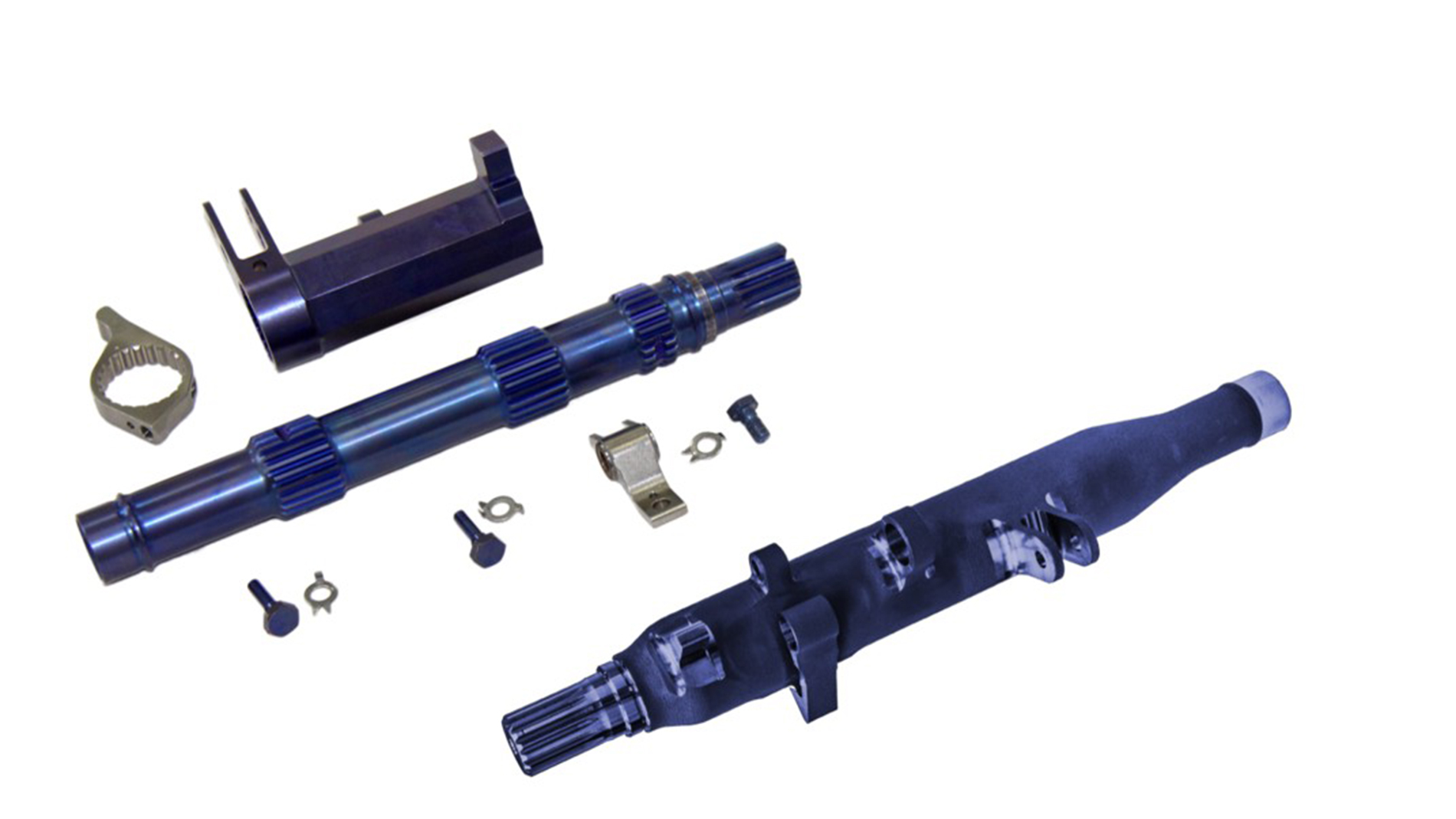
Perhaps surprisingly, Airbus Helicopters’ 3D printing center in Donauwörth has written its biggest AM success story to date not with components for helicopters, but with 3D-printed latch and drive shafts for the doors of the Airbus A350. The doors, which are mass produced in Donauwörth, have been fitted with 3D-printed latch shafts since 2017. “The latch shafts are 43 percent lighter and 23 percent less expensive to manufacture than the conventional design, and the component consists of just one part instead of the previous ten,” explains Frank Rethmann, Head of the 3D Printing Industrial Service Center at Airbus Helicopters. In the past eight years, around 17,500 latch shafts have been 3D printed in Donauwörth, which makes the shafts the ‘bread and butter’ for 3D printing at Airbus Helicopters in Donauwörth.
The latch shafts are a good example of how additive manufacturing has gradually gained a foothold in the aviation industry: For years, systematic investigations were conducted to determine whether aircraft components could be successfully 3D printed, either for weight savings or improved function. An important, often limiting factor was the industry’s strict approval regulations, which meant that manufacturers such as Airbus started using AM for less critical (i.e. non-safety-relevant) parts and components first.
“Significant weight savings”
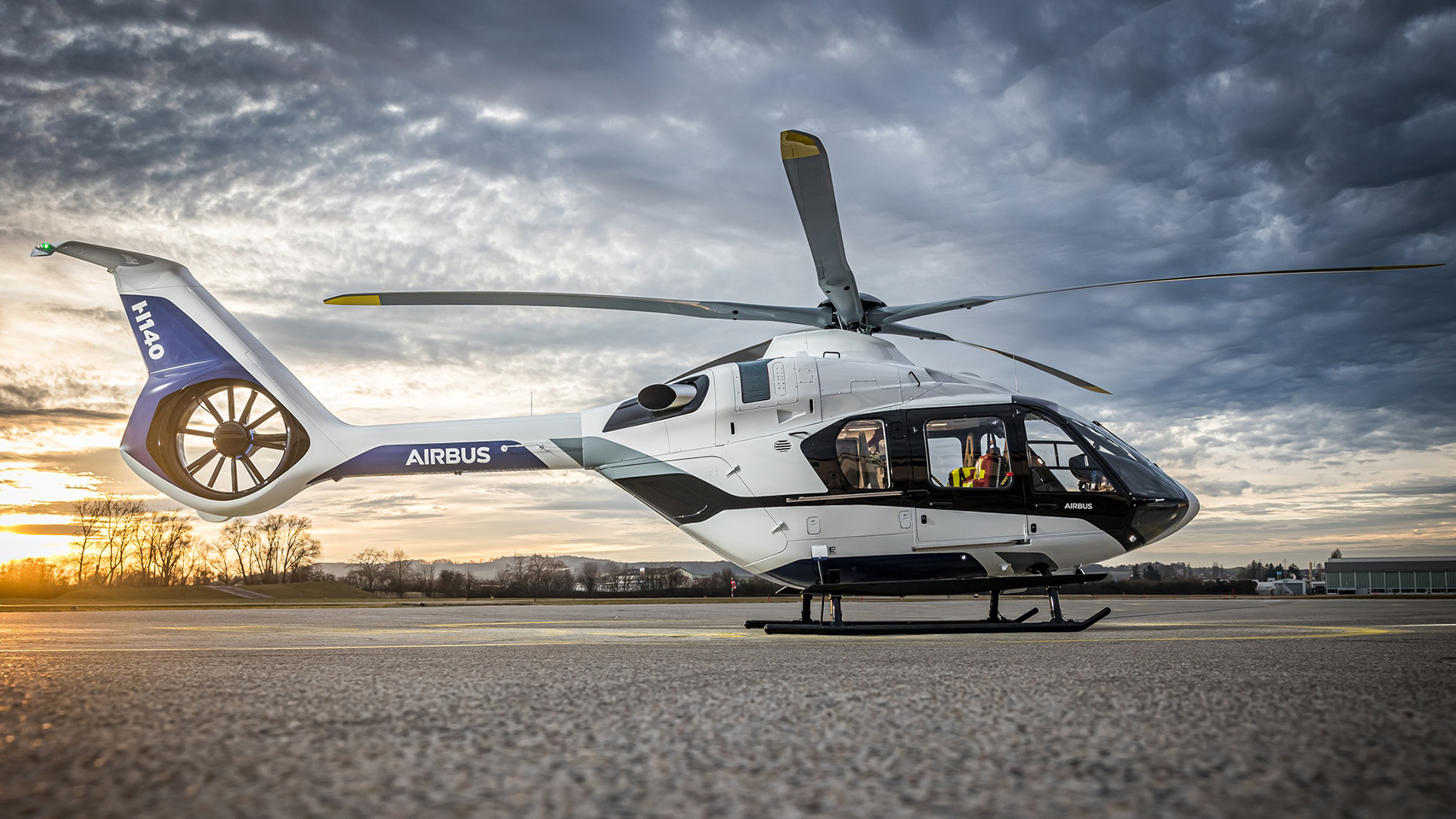
New aircraft and helicopter models offer even greater potential for the use of Additive Manufacturing – as demonstrated by the H140 helicopter, a lightweight, twin-engine helicopter that was unveiled a year ago and is scheduled for initial delivery to customers in 2028. AM did, in fact, play an important role in the development of test vehicles and demonstrators for the H140 some years ago. However, according the Rethmann, AM will also set new standards in series production for the H140. The number and nature of the 3D-printed parts to be installed in the H140 is still a well-kept secret within Airbus, “but it’s a large proportion,” reveals Rethmann. As a rule, the 3D-printed components at Airbus Helicopters are 40 percent lighter than their conventionally manufactured predecessors. In the H140, this means that the 3D-printed metal parts bring “significant weight savings” with a maximum take-off weight of around 3.2 tons. “Such weight savings enable longer flight times or larger payloads. In air rescue, for example, it means that more equipment can be carried,” explains Jörg Michel, press spokesman for Airbus Helicopters.
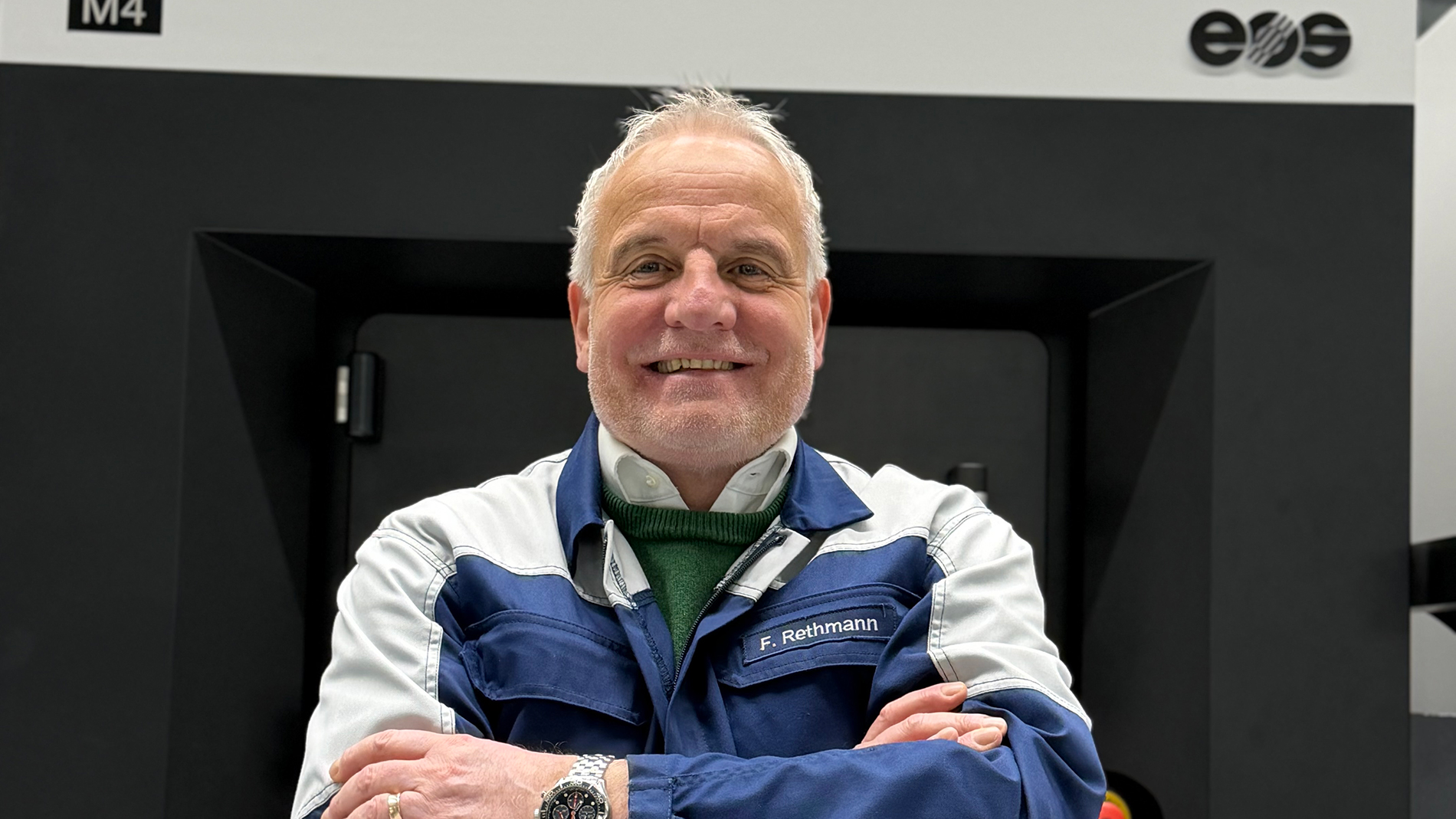
“Long development processes are standard for the aviation industry,” says Rethmann. “The design of the H140 was developed and finalized years ago.” Not only were existing components and parts replaced with 3D-printed alternatives in the H140, but the possibilities and design freedom offered by Additive Manufacturing were also considered during the helicopter’s design phase. A fact made possible by the AM experience of the engineers and designers at Airbus Helicopters, who had been working with metal 3D printing for around eight years, supported by numerous design training courses. “We are now reaping the rewards of our years of work with AM.”
AM in Donauwörth
With the 3D printing of locking shafts for the A350 doors and numerous other components, the AM division in Donauwörth has also continued to grow. “We wanted to understand the entire AM process from the outset,” explains Rethmann. An important step in this direction was the opening of the Airbus Helicopters’ AM Tech Center in fall 2023. Besides an extensive arsenal of AM systems (six PBF systems for metal production, eight professional plastic systems, and several desktop printers), the center also houses systems for post-processing and quality assurance. These include depowdering, heat treatment, pickling, and non-destructive testing (NDT). The high quality requirements mean that 70 percent of the total effort involved in manufacturing a 3D-printed metal part is spent on post-processing, while 3D printing itself accounts for only around 30 percent, according to Rethmann.
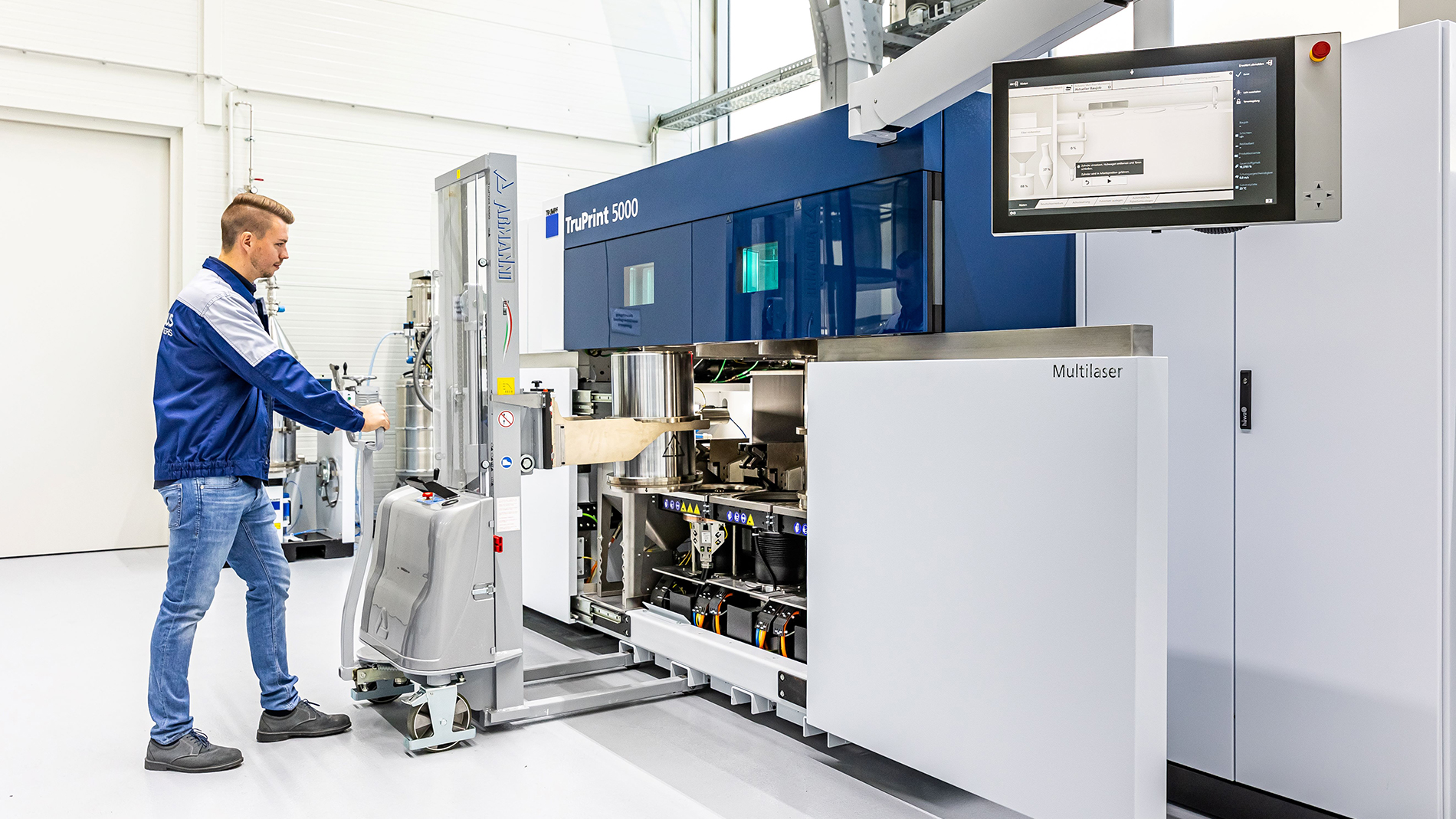
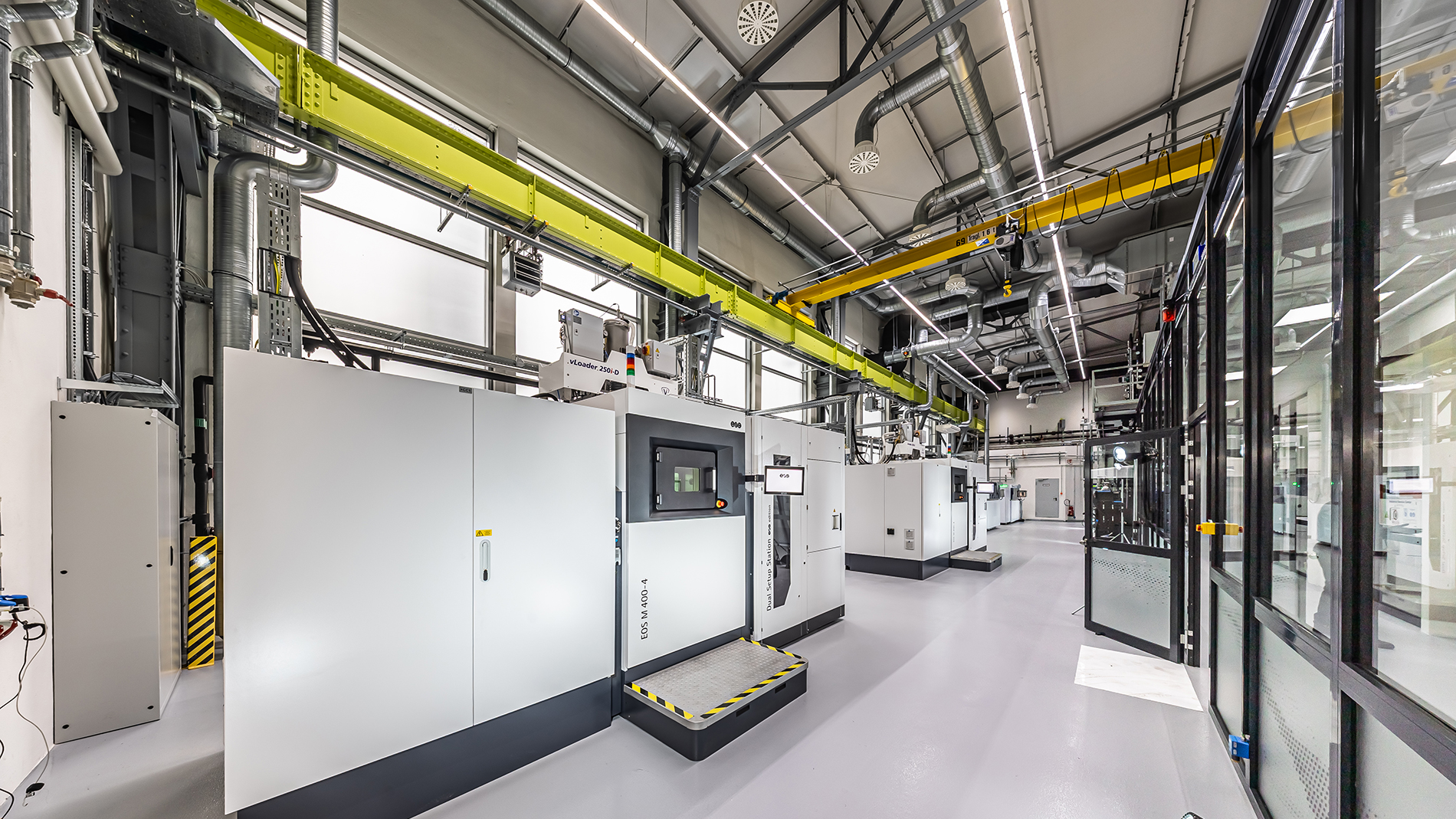
The AM Tech Center not only prints prototypes and series parts, but also numerous production aids, such as drilling templates and flight test mounts. The 3D-printed components are used exclusively within the Airbus Group, even though there have been numerous inquiries from external companies, as Rethmann reports. He repeatedly mentions “his customers” in conversation, but is referring exclusively to colleagues from other Airbus programs.
Spare parts for existing helicopters are not yet printed at Airbus, although Rethmann sees this as an area with potential that is “worth considering.” After all, older military helicopters are still in use around the world – some have been flying for more than 50 years. “The design drawings were drawn in ink back then, so the issue of spare parts is a real challenge.” 3D printing is not straightforward in this area either, however – after all, even aging machines have to meet high standards. For 3D printing, this would certainly mean years of qualification work.