
Reading time: 6 minutes
Text: Thomas Masuch
The energy sector is a key market for the KSB Group, whose pumps and valves can be found on oil rigs and in nuclear power plants. The continuous demand for replacement parts and the short lead times required for many new projects drive the need for additive manufacturing (AM).
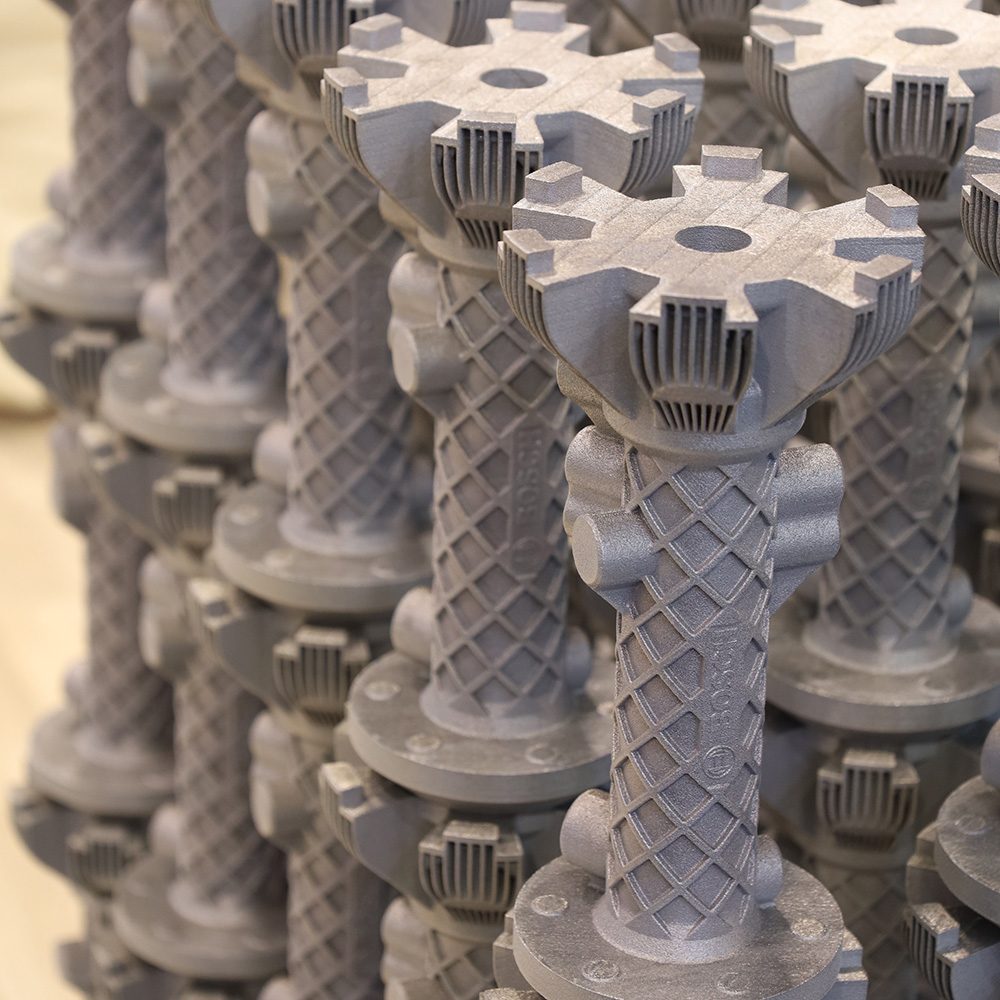
Most of KSB’s AM production is for its own use, with about 60 percent of the metal-printed components being used as replacement parts for its own pumps and valves. Selecting the appropriate components is far from straightforward: KSB has around 1,000 different product series in its portfolio—each in a range of sizes. “It’s quite a challenge to preselect which spare parts would be suitable candidates for 3D printing,” explains Stephan Braun, who works as Business Development Manager for Additive Manufacturing at KSB. When, for example, inquiries about specific replacement parts come in, the service staff in the spare parts department make the initial selection. “They’ve also been trained in the capabilities of 3D printing and are familiar with the projects we’ve already implemented.”
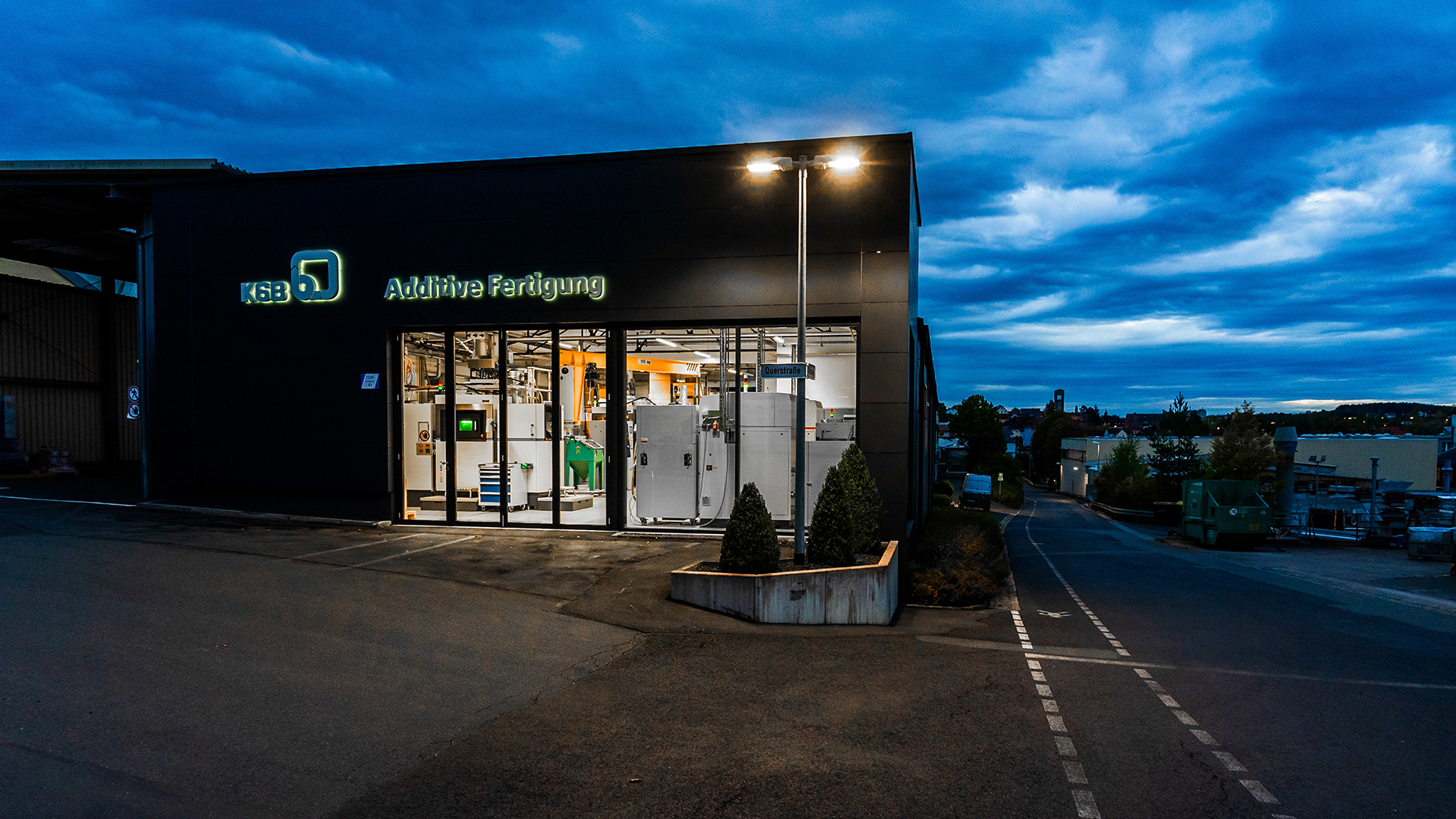
KSB has been focusing on 3D printing for more than a decade. The company purchased its first 3D printer in 2014 and opened its own AM production facility—specializing in metal 3D printing—in 2018. Today, 17 employees, including operators, engineers, and order processors, work here under the “KSB SupremeServ – Parts On Demand” brand. The machinery includes more than 10 powder bed systems of various sizes, as well as an accredited laboratory and post-processing equipment.
The right selection
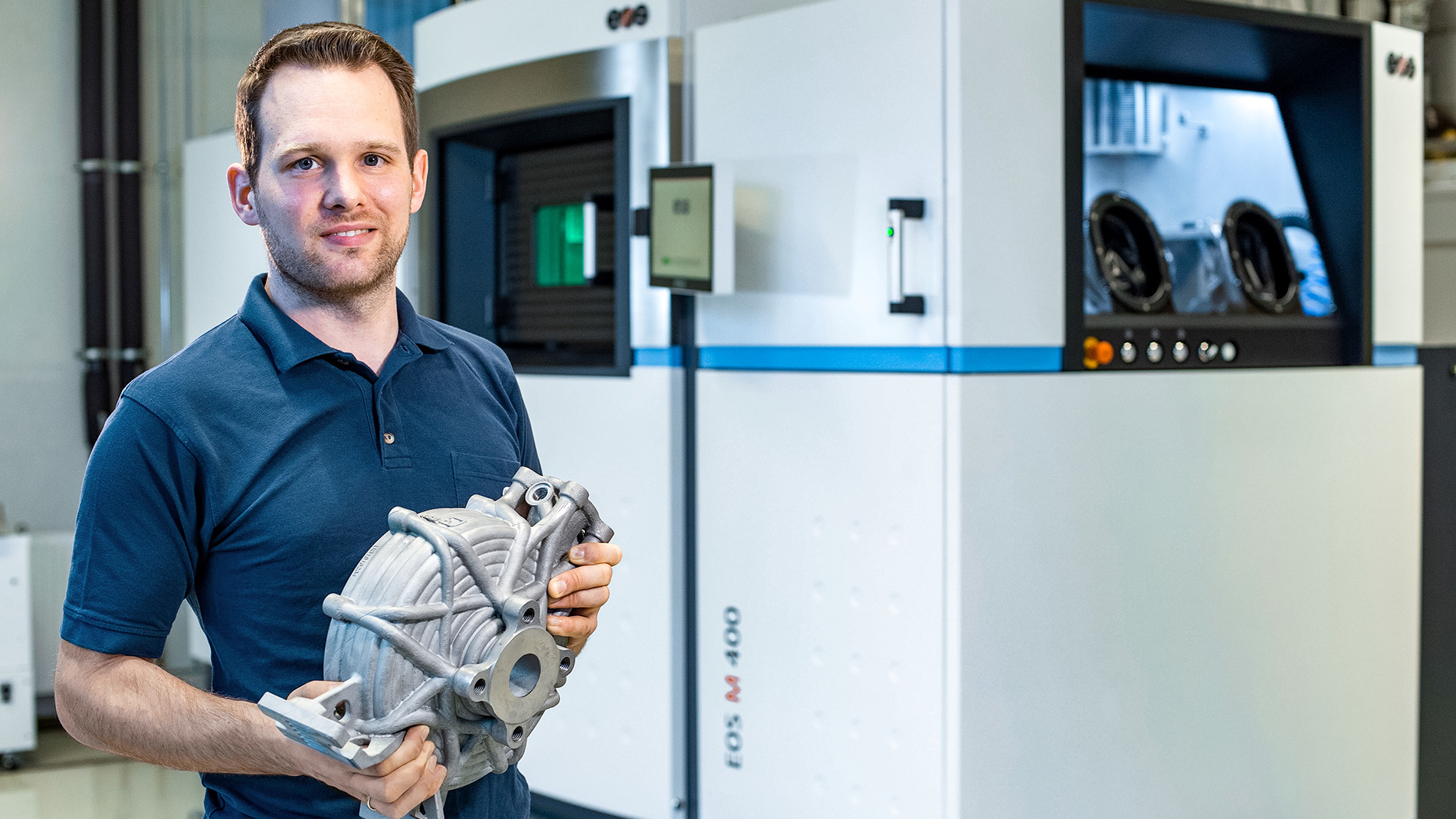
Due to the company’s strong focus on metal 3D printing, the selection of suitable replacement parts centers on those that would otherwise be cast, explains Braun, who has been involved in the development of KSB’s AM department from the very beginning. In this context, 3D printing has to compete with this traditional manufacturing method, which is often more cost-effective when it comes to standard materials, Braun explains. “Then again, anything that features channels is a good candidate for 3D printing, because that’s where 3D printing really comes into its own.” Another factor is fast turnaround time: When components are needed urgently—to prevent parts of the production process from being disrupted—the slightly lower cost of cast parts is not usually the deciding factor. In fact, both manufacturing methods are sometimes combined to find the most customer-friendly solution possible: “For one project, we 3D-printed the first two impellers and then cast the rest.”

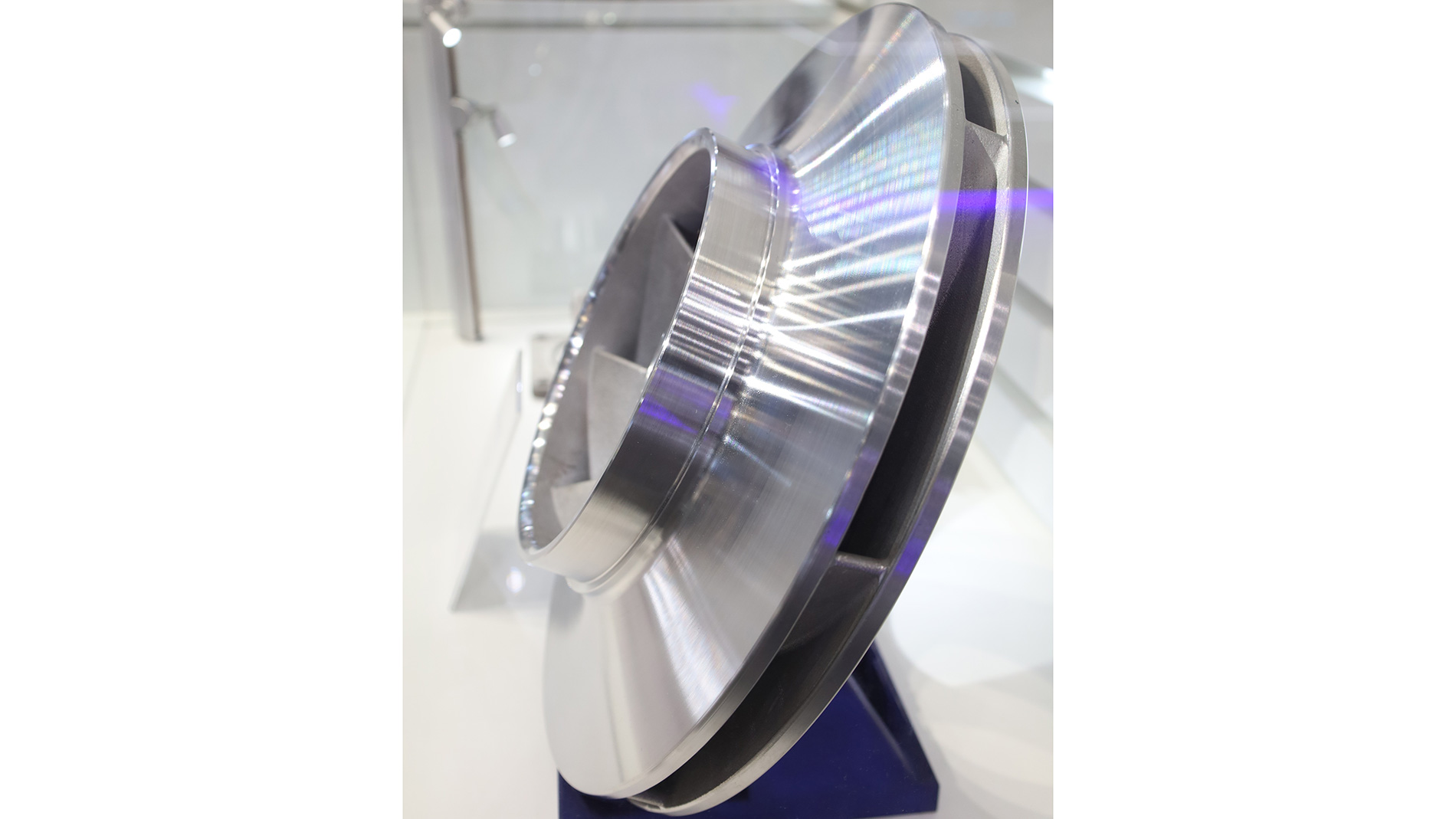
The “Additive Research and Development” division, which has been researching various AM topics using its own equipment since 2014, also falls under the purview of Marco Linhardt, Head of Additive Manufacturing Production. Here, for example, new AM technologies are tested and evaluated, and components are optimized. “This is because, in the case of existing replacement parts—where the original design is reproduced exactly in 3D printing—the wall thicknesses, for example, are designed to meet the requirements for casting.” With 3D printing, the wall thickness can be reduced, meaning that the impellers end up weighing only one-third of their previous weight. On the other hand, new designs have to undergo a number of steps, including hydraulic testing and approval, which can be a time-consuming process.
For oil platforms, nuclear power plants, and H₂ fueling stations
In addition to producing spare parts for KSB’s own needs, Marco Linhardt and his team have successfully completed a wide range of projects for customers across various industrial sectors. For example, 14 impellers were required for the overhaul of two high-pressure gear pumps from the HVR series on the Snorre oil platform operated by Equinor in the Norwegian North Sea. At the customer’s request, the original duplex steel was replaced with a nickel-based alloy (Inconel 625) that is more resistant to seawater. The impellers, each with a diameter of 409 mm, were additively manufactured on an EOS 400-4 in 76 hours each. Instead of the typical lead time of 6 to 8 months associated with the casting process, KSB was able to deliver the impellers in just 9 weeks.
Another example involves four components for a test pump with a flow rate of several liters per second, which were delivered within a few weeks. The pump, which is designed for use in the novel Small Modular Reactor (SMR) from NAAREA, has a planned operating temperature of around 500 °C. In the field of nuclear energy, KSB has also entered into a development partnership with Framatome and is supplying components for a nuclear fusion project through the Bayern Innovativ initiative. In addition, KSB has teamed up with Blykalla, a Swedish developer of small modular nuclear reactors, to develop specialized pumps for Blykalla’s SEALER technology. “In development projects like these, AM is almost inevitably used because it is usually impossible to implement the innovative designs involved in any other way,” explains Linhardt.
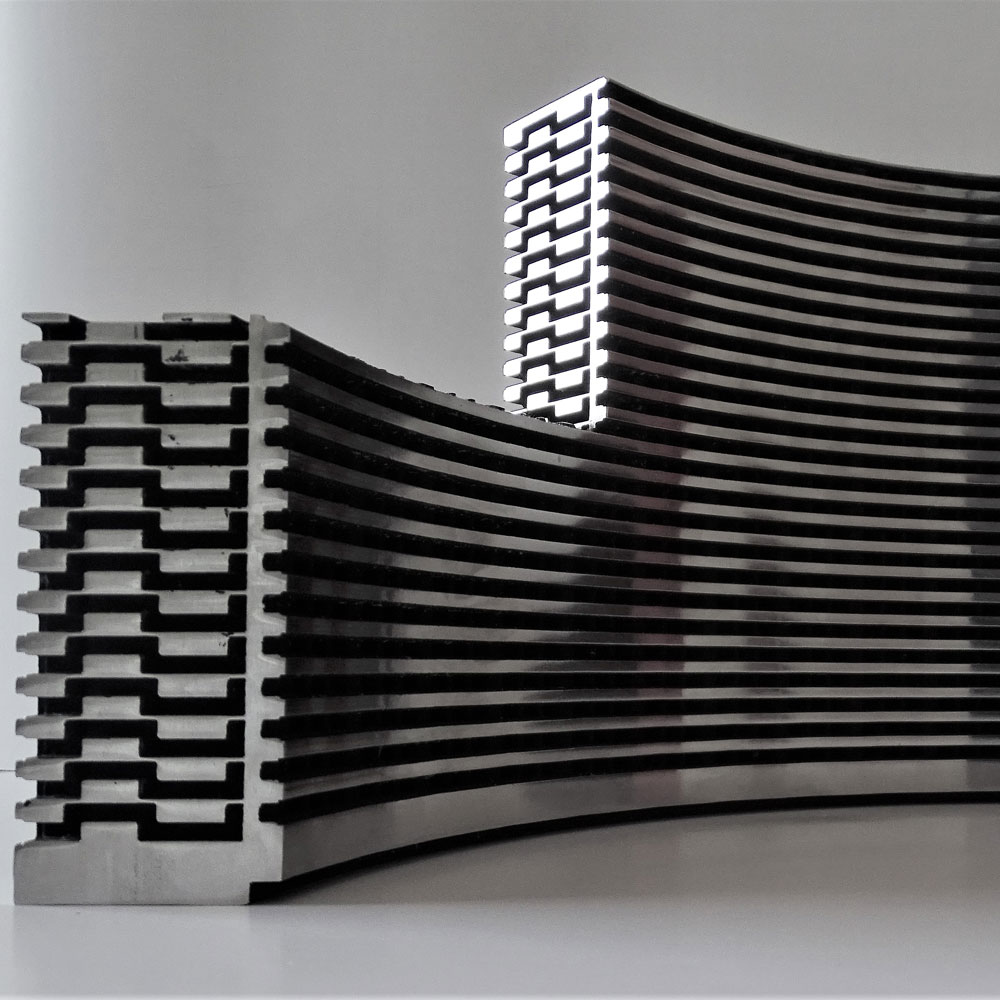
Heat exchangers for hydrogen refueling stations also need to be able to withstand extreme conditions such as high pressure. The heat exchangers are used to pre-cool hydrogen to as low as -40 °C in order to reduce refueling time, with operating pressures reaching up to 875 bar. The 3D-printed heat exchangers—which are designed to be highly compact and pressure-resistant—are rated for pressures up to 1,050 bar, but during tests at the Physikalisch-Technische Bundesanstalt in Berlin (the National Metrology Institute of Germany), they actually withstood pressures exceeding 5,000 bar, “until they consistently broke at the same spot,” reports Braun. “This speaks to the quality of the component and the manufacturing process.” KSB supplies the heat exchangers to Funke, a specialist company that is part of the Hydac Group.
Certifications and high-capacity utilization
Various certifications are an integral aspect of the development of AM at KSB. KSB has been certified to manufacture pressure-bearing parts in accordance with the European Pressure Equipment Directive since 2019. In December 2023, KSB’s additive manufacturing facility received DNV certification (from the Norwegian testing agency Det Norske Veritas) up to the highest level AMC3 for the impeller part family made of Noribeam 625, which is typically used in pumps.
Projects for in-house needs and for external customers keep the AM systems in Pegnitz busy producing components for most of the day. Marco Linhardt estimates the utilization rate of the AM systems at 70 to 80 percent, whereby the term “utilization” refers specifically to the printing process (i.e., when the laser melts the metal powder). “That’s relatively high for the industry,” Linhardt notes with satisfaction. He and his team are also able to achieve this high level of efficiency by using series-produced parts—which are then kept in stock—to cover gaps caused by the fluctuating nature of the spare parts business.