
Reading time: 8 minutes
Text: Thomas Masuch
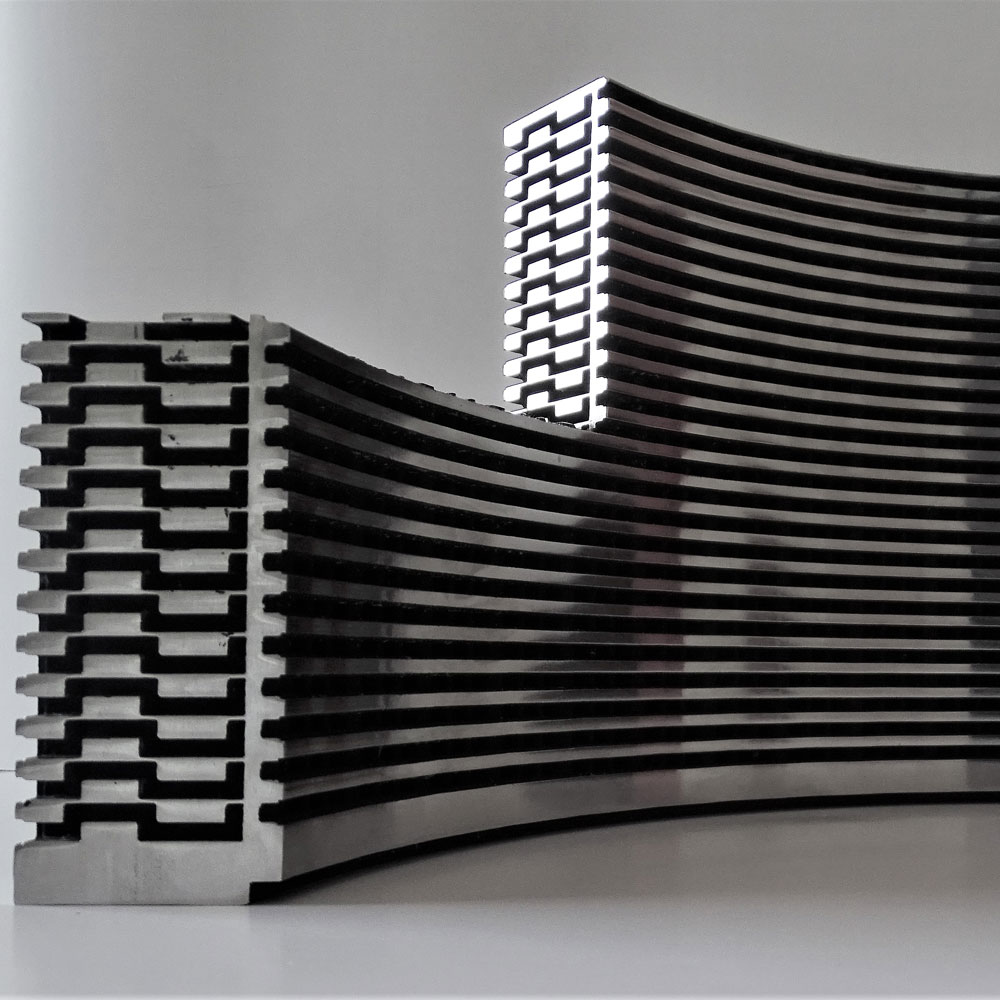
The energy, oil, and gas industry is extremely diverse. Something that is also reflected in the many possible applications of additive manufacturing, which range from the development of new generators to bipolar plates, as used in the hydrogen industry, to numerous power plant components. And wherever energy is converted, heat exchangers are also used. AM and integrated cooling channels can be used to make these exchangers more powerful and efficient.
Power plants
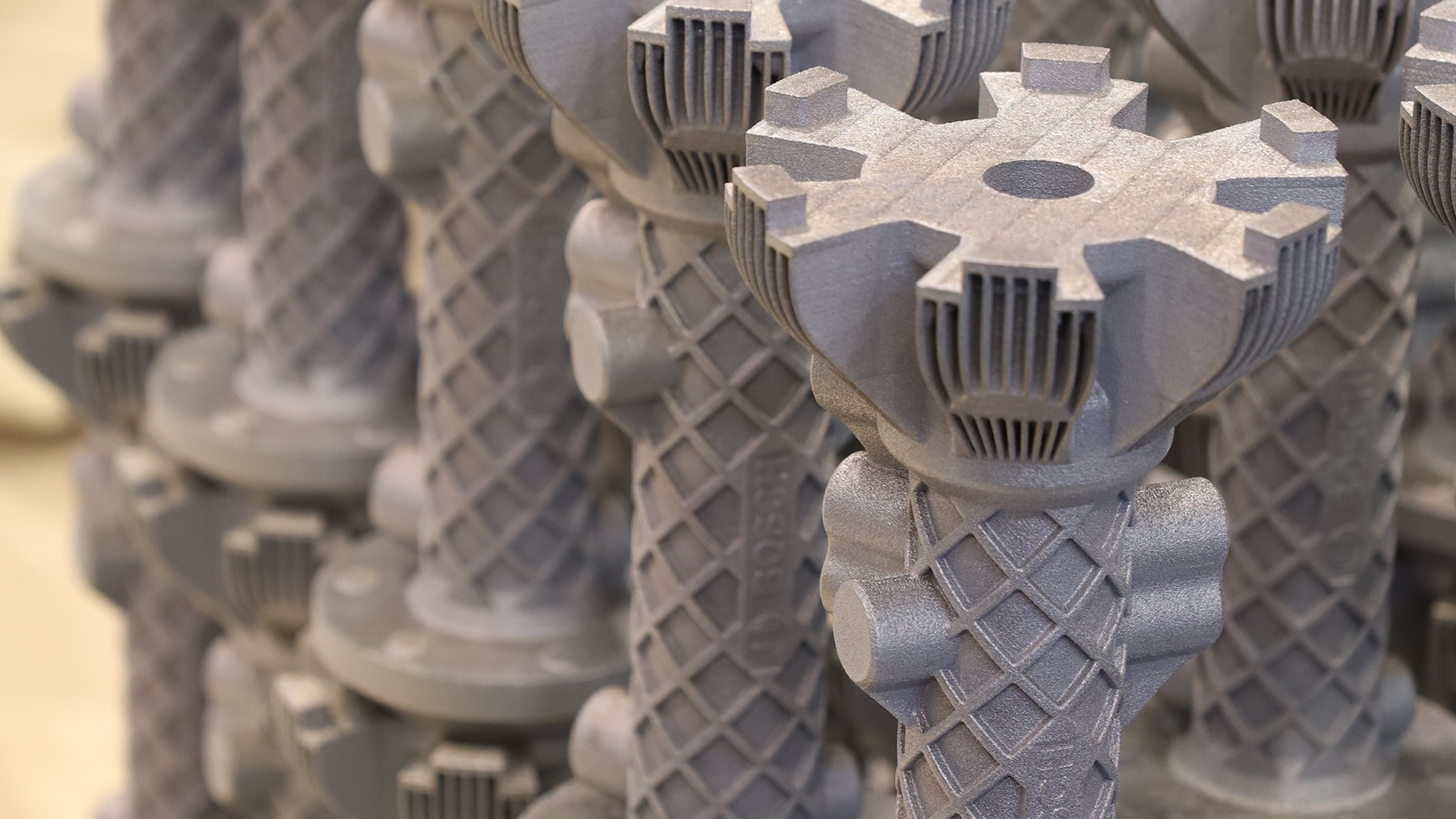
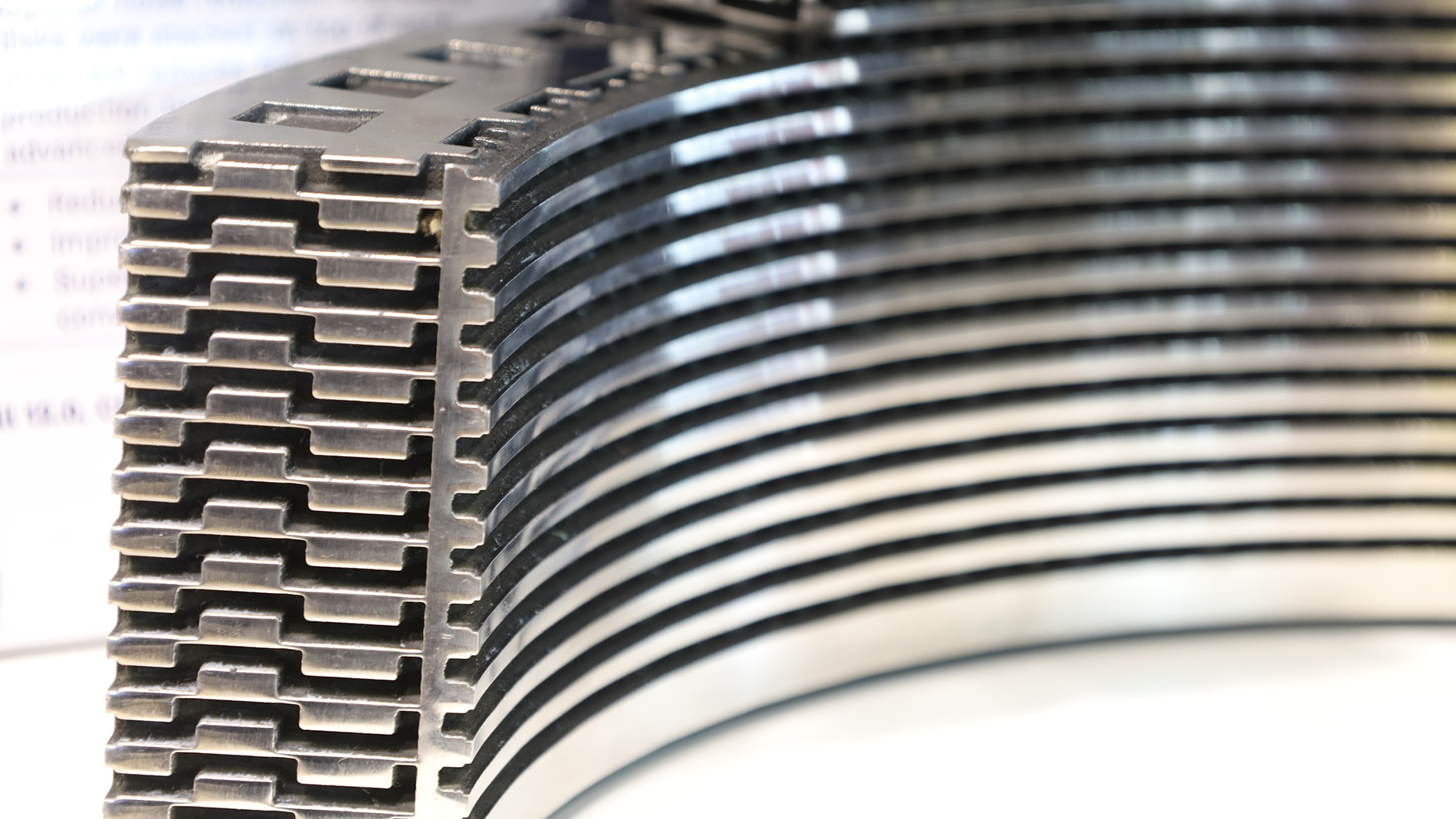
In coal, gas, and nuclear power plants, for example, AM is used in pump parts called labyrinth discs, which are found in valves and improve maintenance work, as well as numerous parts and components found in turbines.
Siemens Energy has been using AM for almost 20 years, with various centers of excellence, including one in Finspång, Sweden, being a key driver of development. In 2017, an important milestone was reached with the first 3D-printed gas turbine blades, which were successfully tested in the turbine under full load conditions. Today, AM at Siemens Energy does much more than prototyping: The company is involved in the series production of complex parts such as burner nozzles and turbine blades.
AM components are also frequently used in nuclear power plants. Vattenfall, for example, is using 3D-printed spare parts and components to enhance the operational safety and increase the service life of older reactors built in the 1970s and 1980s. Westinghouse, one of the world’s leading nuclear power technology companies, also uses AM on an industrial scale. In 2020, it installed the first safety-related AM component, a thimble plugging device, in a commercial reactor. Just four years later, it produced its thousandth additively manufactured component for VVER-440 fuel elements. These are only used in Soviet pressurized water reactors, but after Russia’s war in Ukraine, Western companies such as Westinghouse have also begun to qualify these hexagonal fuel elements for delivery to countries using former Soviet reactor technology (in Eastern Europe and Finland, for instance).
Additive Manufacturing also plays an important role in the development of new generators: Founded in 2015, the US company Hyliion operates its own M-Line system from Colibrium Additive, using it to print complex components (heat exchangers with internal cooling channels) for its innovative thermodynamic Karno generator, among other things. Hyliion’s goal is not only to make power generation more decentralized, but also to make it more efficient than today’s gas-fired power plants. The reactors, which can also be powered by hydrogen or biogas, are currently being tested by the US Navy, among others.
Oil and gas
The extraction and processing of oil and gas is a classic application sector in the energy industry. Prototypes have been made using AM for around 25 years, functional metal parts for around 15 years, and certified industrial applications for around 10 years. The oil and gas industry often requires small quantities at short notice, which are produced flexibly in a decentralized manner (e.g., on oil rigs). And if production is affected because of a missing spare part, it rarely matters if a component is slightly more expensive, as long as it can be delivered quickly. In some cases, 3D printers are operated remotely on oil platforms. By now, almost every major player in the industry is likely to be using AM with applications ranging from heat exchangers and pressure vessels to drilling components and alignment systems for oil and gas wells.
Hydrogen
Bipolar plates were on display at numerous booths at Formnext 2025. These play a central role in the use of hydrogen as an energy source, whether in its production in electrolysers or in its conversion into electricity in a fuel cell. The leak-tight bipolar plates distribute the reaction gases hydrogen and oxygen, conduct the electric current between the cells, provide cooling, and at the same time separate the individual cell compartments from each other. Thanks to AM, complex cooling structures with integrated flow channels can be produced that are difficult or impossible to achieve using conventional methods. This reduces pressure losses and allows better utilization of the reaction surfaces, for example. Another advantage is that AM can reduce the weight of the bipolar plates, which is extremely important for aircraft engines, for example. The topic is also being advanced in research. For example, the Chair of Digital Additive Production (DAP) at RWTH Aachen University is working with partners from industry and research to develop innovative additive solutions along the entire hydrogen value chain. These range from optimized, scalable cell architectures for electrolysers to hydrogen-compatible pipelines and industrial burner systems.
Renewable energy
Although renewable energy generation may not be a central field of activity for AM, it has numerous applications in this area as well. These range from repairing turbines in hydroelectric power plants to brackets and heat sinks in the production of solar modules to 3D-printed foundations for wind turbines. GE Renewable Energy is one of the most active players in this field in collaboration with Cobod and Holcim, among others. The 3D printing of concrete segments weighing several tons is intended to simplify logistics, among other things. In addition, even larger foundations (and thus taller turbines) are conceivable, which have not been practical until now due to maximum dimensions for road transport.
Opportunities for service providers
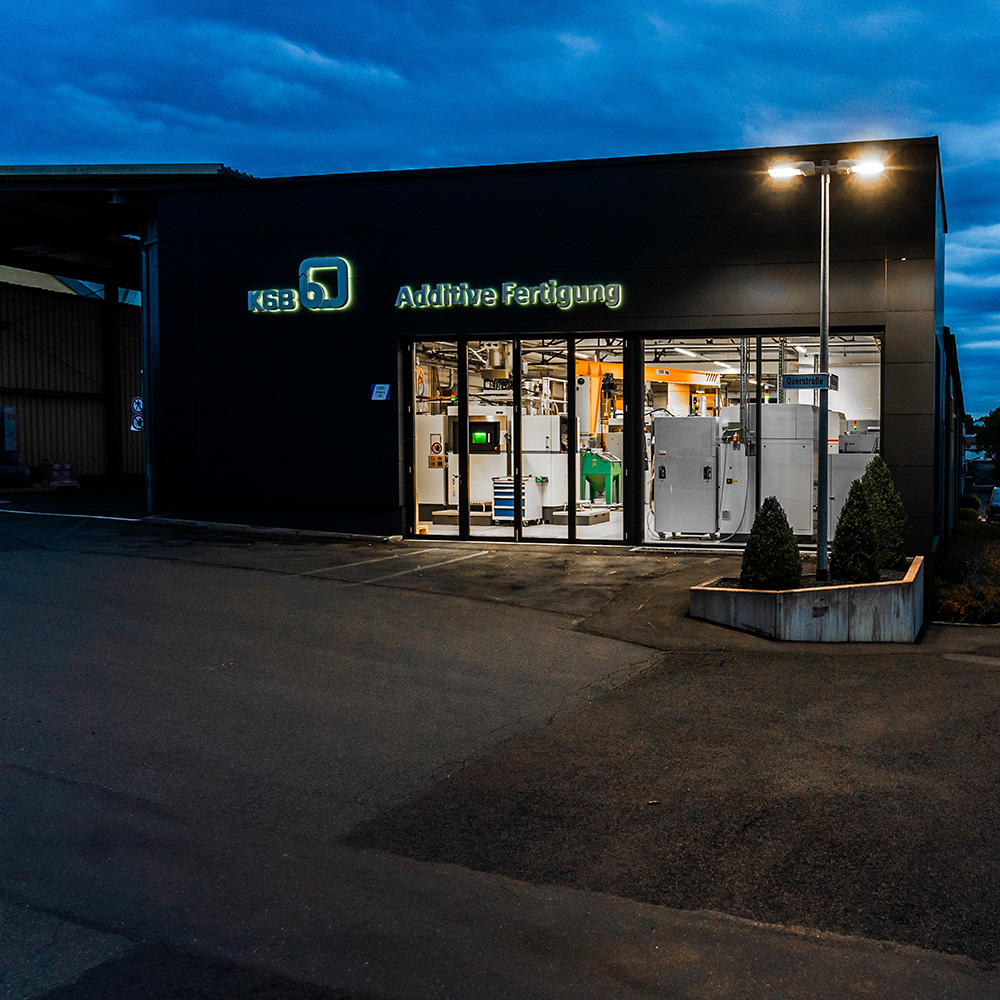
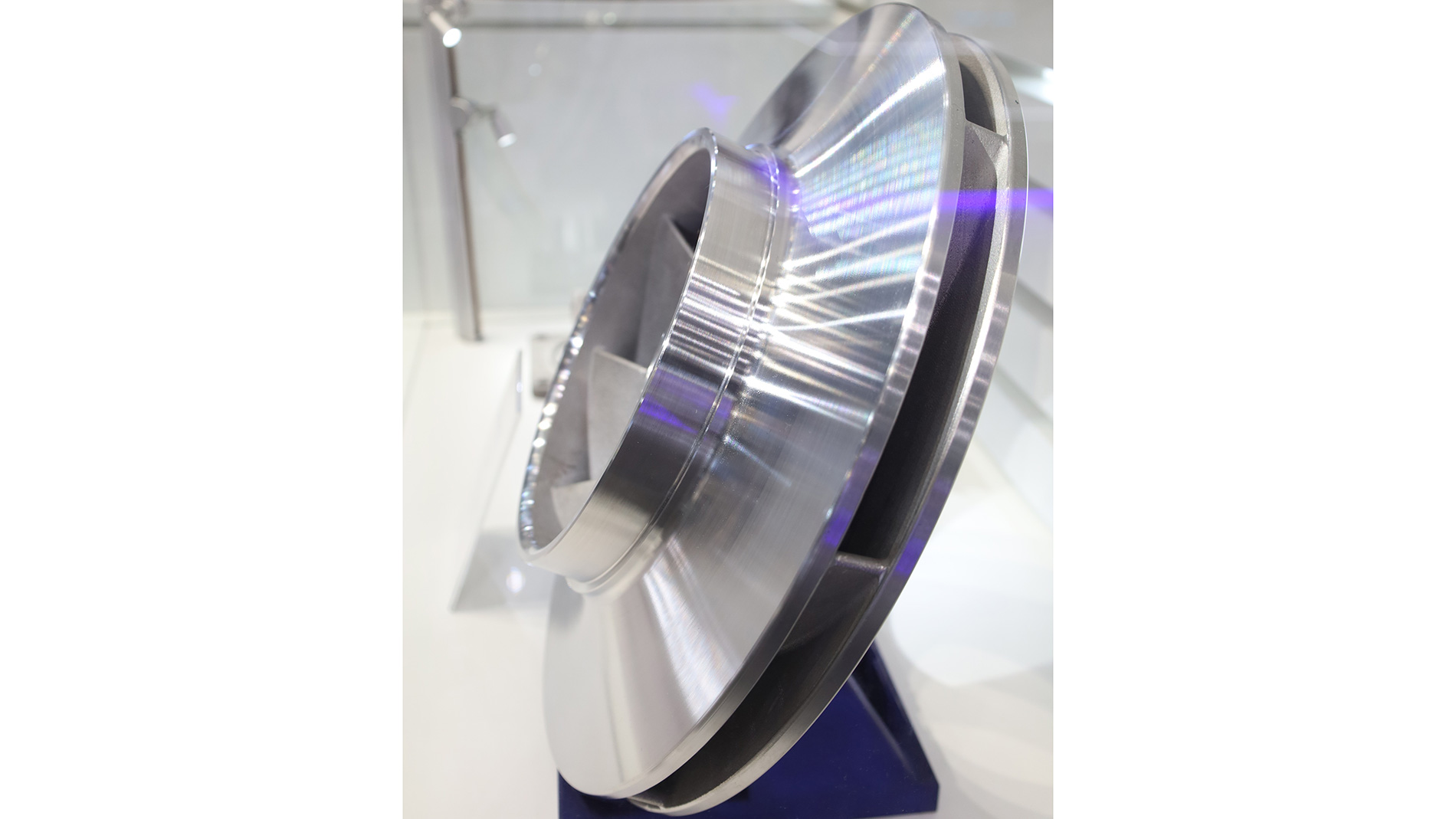
The possible uses for Additive Manufacturing within the energy sector are also illustrated by the company KSB. The world’s leading manufacturer of pumps and valves has set up an Additive Manufacturing facility at its Pegnitz site, where it offers services to other companies under the KSB SupremeServ brand. In December 2023, the Additive Manufacturing facility received DNV certification (from the Norwegian testing agency Det Norske Veritas) for Noribeam 625 material for AMC3 impellers, which are typically used in pumps. To date, KSB has delivered many 3D-printed impellers as spare parts, including to an Equinor oil platform and for a nuclear reactor.
Further information:
https://www.ksb.com/de-de/supremeserv/parts-on-demand
https://www.hyliion.com/blog/karno-tech-series-additive-manufacturing/