
Reading time: 2 minutes
Text: James Woodcock
It is one thing to talk about Additive Manufacturing as the future of aerospace production. It is another to build a 350 m² controlled environment, staff it with specially trained engineers, and invite the UK’s Minister for Defence Readiness and Industry to cut the ribbon. Rolls-Royce did the latter last month, opening a new Additive Manufacturing Development Cell at its Defence Assembly and Operations facility in Bristol.
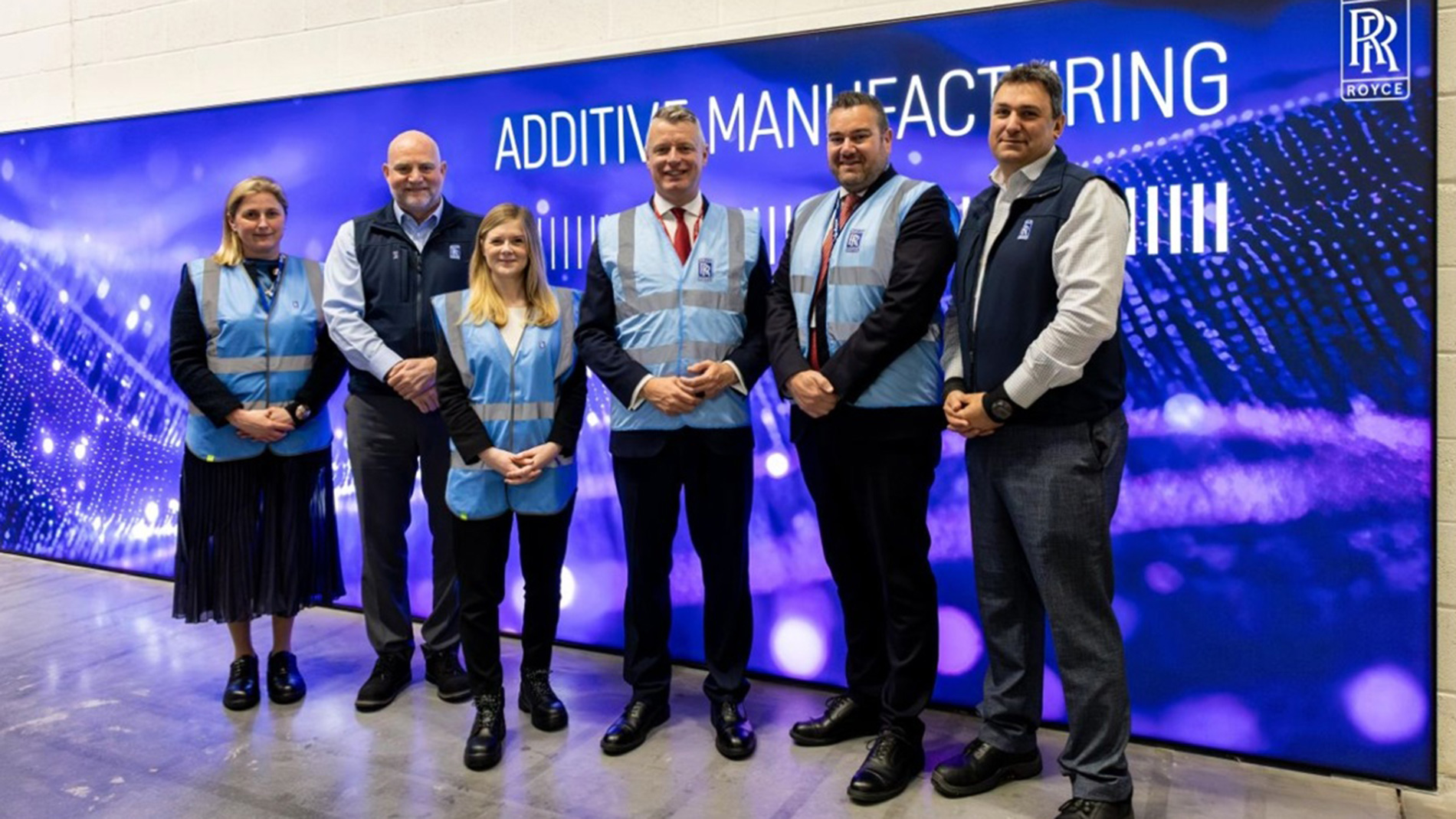
Funded by the UK Ministry of Defence, the cell uses metal AM equipment from Nikon SLM Solutions to produce critical components for next-generation aircraft engines. The environment is controlled for humidity, temperature and air pressure and is designed to ensure the consistency that safety-critical aerospace parts demand. The cell is also expected to play a role in both the Global Combat Air Programme (GCAP) and the Future Combat Air System (FCAS).
The UK is Formnext’s partner country this year, and Bristol’s aerospace cluster is one of the UK’s strongest claims to global AM leadership. This kind of government-backed, production-focused investment is precisely what that partnership is intended to showcase.